Hacker Tradecraft · Volume 10
Hacker Tradecraft Volume 10 — The Blue Hat: The Defender
The SOC analyst, the incident responder, the threat hunter, the detection engineer — and the Microsoft BlueHat disambiguation that lives in the same word; with the RF defensive angle (rogue-AP detection, IMSI catcher detection, spectrum monitoring) that ties the defender's hat back to the rest of the Hack Tools project
Contents
About this volume. Volume 10 is the defender’s volume. It treats the blue hat as the field actually uses the term in 2026 — the practitioner who builds, monitors, investigates, and hunts from the defensive side: the SOC tier-1 analyst working an alert queue, the tier-2 escalating into deeper investigation, the tier-3 / DFIR responder leading a breach engagement, the threat hunter writing hypothesis-driven queries against a SIEM, the detection engineer turning a threat-intel report into a working Sigma rule, the threat-intel analyst feeding the detection pipeline. It is also the volume that disambiguates the other live meaning of “blue hat” — Microsoft’s BlueHat program and BlueHat conference, an external-researcher-meets-vendor program with substantively different vocabulary. Both meanings appear in 2026 industry usage; this volume treats both but the defender meaning is the primary subject. The RF defensive angle — rogue-AP detection, IMSI-catcher detection, spectrum monitoring — appears in §3.7 and §4.6 as the bridge back to the Hack Tools hub’s RF coverage. The reader (tjscientist, 45+-year EE/SW engineer) is not a working SOC analyst, but the engineering instincts that the defender’s role rewards — patient instrumentation, signal-to-noise discipline, hypothesis-driven debugging — map directly onto how an EE thinks about a misbehaving circuit. The blue hat is the systems-engineering hat of the seven.
1. Definition and boundary
The blue hat is the defender: the practitioner whose authorized work is building, monitoring, investigating, and hunting from the defensive side of a network, an endpoint fleet, a cloud tenant, or a critical-infrastructure environment. The authorization that makes the white hat (Vol 6) white-hat is shared with the blue hat — the SOC analyst, the IR responder, and the detection engineer all operate under employment or contract on infrastructure their employer is responsible for defending — but the engagement role is different. The white-hat practitioner emulates the adversary; the blue-hat practitioner detects, contains, and responds to the adversary. Both sit on the same side of Axis 1 (authorized, constructive) from Vol 5 §6.1; the distinction is on Axis 2, the engagement-role axis. White-hat work is offensive in posture; blue-hat work is defensive in posture. They are siblings, not opposites.
This positioning matters because the popular shorthand “white hat = good guy, black hat = bad guy” collapses Axis 1 and Axis 2 into a single dimension and loses the defender entirely. The blue hat is white-hat-on-Axis-1 and defender-on-Axis-2. The same individual can be white-hat-red-team on Monday’s engagement (Vol 6 + Vol 11) and white-hat-blue-team on Tuesday in the same employer’s SOC — the hat changes with the activity, not with the person. Vol 12 (purple hat) treats the deliberate-integration practice that combines both at depth; this volume treats the defender’s posture as a primary subject of its own.
A second clarification worth making up front. Blue hat in 2026 has two live meanings, and Vol 5 §5.4 documented both. This volume treats both; the rest of §1 and all of §2.3 disambiguate them carefully. The two meanings are:
(a) The defender — the primary modern meaning in industry usage: SOC analysts, incident responders, threat hunters, detection engineers, threat-intel analysts, the entire defensive-operations population. This is the meaning that maps onto Vol 5’s two-axis taxonomy as “white-hat-on-Axis-1, defender-on-Axis-2.” It’s the meaning that appears in job postings (“senior blue-team analyst, financial sector”), in conference village names (“Blue Team Village” at DEF CON, founded 2018), and in the trade-press writing that distinguishes red from blue from purple. This volume is primarily about the defender meaning.
(b) The Microsoft BlueHat program — an external-researcher-meets-vendor program Microsoft started in 2005, in which Microsoft invites accomplished outside security researchers to brief Microsoft’s internal engineering teams on vulnerabilities the researchers have found in Microsoft products, and to participate in the BlueHat conference / BlueHat IL technical-talks events. The “blue hat” in this context refers to the invited external researcher — fundamentally a white-hat-research-track activity, with a Microsoft-issued designation attached, that has nothing structurally to do with the defender role. The two meanings collide because they share a word, not because they share a function. This volume covers this meaning at §2.3 and references it where it matters; the primary subject remains the defender.
The legal-and-ethical boundary for the defender meaning is the inverse of the black hat (Vol 7): blue-hat work is, by employment construction, authorized — the SOC analyst is paid by the organization whose network they are monitoring; the IR consultant has a signed engagement letter; the detection engineer has a contract or an employment relationship. Authorization in blue-hat work is rarely contested because it’s structural to the role; unauthorized defensive activity (a third party scanning a stranger’s network to “help”) is grey-hat at best and unauthorized intrusion at worst — Vol 8 treats this case. The exception worth noting is “hack-back” or “active defense” — using offensive technique against an attacker during an active incident — which is legally fraught in nearly every jurisdiction, is not generally authorized by victim-state law even against an attacker, and remains an unsettled norm in 20261. The U.S. ACDC Act (“Active Cyber Defense Certainty Act”) has been re-introduced repeatedly since 2017 without becoming law; the legal posture is unchanged. The defender’s authorization envelope covers infrastructure they own or are contracted to defend; it does not cover reciprocal intrusion. Vol 19 §6 will walk the hack-back legality at depth.
1.1 The defender’s authorization is structural to the role
The white-hat volume (Vol 6 §1) walks the authorization-paperwork stack — SOW, scope document, ROE, get-out-of-jail letter — that makes a pentest engagement authorized rather than criminal. The blue-hat practitioner has, in most cases, none of these artifacts because they don’t need them. Authorization for defensive work is established in the employment relationship: the SOC analyst’s employer owns or operates the network they are monitoring, and the analyst’s job description establishes the scope of their authorized activity. An incident-response consultant operates under a signed engagement letter; the engagement letter is shorter than a pentest SOW because the work is monitoring-and-investigation-and-response within infrastructure the client controls, not active adversary emulation against it.
Where the defender’s authorization gets thinner is at the edges:
- Cross-organization investigations. A breach at the client’s organization sometimes requires investigating activity that touches a third party (a partner organization, a SaaS vendor, an ISP). The defender does not extend their authorization to that third party by virtue of investigating the breach. The discipline is the same as the white-hat out-of-scope discovery (Vol 6 §1.2): document, escalate through proper channels, do not pivot. Cross-organization coordination during an active incident is the IR consultant’s hardest single skill; Vol 19 §4 will walk the legal framing.
- Acquired access from threat-intel sources. Threat-intel work occasionally involves access to leaked data, dark-web forums, or stolen-credential dumps. The defender’s authorization to consume that intelligence is established by their employer’s threat-intel-vendor relationships and a (usually) clear internal policy; the defender’s authorization to actively engage with criminal infrastructure (e.g., joining a Telegram channel to monitor an active threat group’s chatter) is more delicate and generally requires legal counsel review. Mandiant, CrowdStrike, Recorded Future, and the other major threat-intel firms maintain explicit policies on this; smaller shops are often less careful.
- Active deception and honeypots. Deception technology (Thinkst Canary, Illusive, the open-source HoneyPy and Cowrie families) deploys decoy assets inside the defender’s infrastructure to detect lateral-movement attempts. The deception is authorized as part of the defender’s instrumentation; the responses the deception triggers are sometimes more delicate (e.g., automatically blocking an IP that touched the honeypot — fine; automatically retaliating against the IP — not authorized). The discipline is “deceive within scope; do not reach outside it.”
- Hack-back / active defense — the textbook unauthorized case. The argument that “the attacker hit us first, so we can hit back” does not survive case-law examination in the U.S., the UK, or any EU jurisdiction. The defender’s authorization stops at the perimeter of infrastructure they own or contract to defend; offensive activity against attacker-controlled infrastructure (even infrastructure used to attack the defender’s network) is unauthorized access under the relevant statute. Vol 19 §6 treats this in full.
The summary: blue-hat work’s authorization is structural and rarely contested, but the edges of that authorization are real and require the same discipline that white-hat scope-management requires. The two hats live on the same side of the legal line; the discipline that keeps each there has the same character.
1.2 What the blue hat is not
Three things the term is sometimes confused with, which it is not:
Not “all SOC work is blue-hat work.” A SOC analyst monitoring a production network for the firm employing them is doing blue-hat work. The same analyst, after-hours, scanning a stranger’s network “because they were attacked from that IP” has — in that moment — wandered out of the blue-hat envelope and into grey-hat or unauthorized territory. The hat tracks the activity, not the job title. This is the same point Vol 6 §1.1 made about the white hat: the hat is descriptive of the engagement’s legal posture, not the person’s profession.
Not “defensive work means lower-skill than offensive work.” This is a persistent industry stereotype, and it is wrong. The skill set required to instrument a complex enterprise environment, write detections that catch sophisticated adversary TTPs without drowning the SOC in false positives, and lead a breach investigation under pressure is at least as demanding as any offensive role — arguably more so in the systems-engineering depth required. The compensation data (§6.3) bears this out at senior levels: senior DFIR consultants and senior detection engineers earn at the same band as senior pentesters. The stereotype persists because the entry-level compensation gap is real (SOC tier-1 pays less than entry-level pentest associate at some firms), but the senior bands converge.
Not “the blue team is the opposite of the red team.” This is the framing that the popular red-vs-blue exercise vocabulary encourages. The accurate framing is red and blue are different roles in the same enterprise, often within the same security organization, increasingly working in collaborative integration (the purple-team practice — Vol 12). Treating them as adversarial roles in any sense other than the deliberate-exercise sense produces worse outcomes for the organization paying both salaries; the mature posture is collaborative.
1.3 The boundary tested by hard cases
Three hard cases that test the blue-hat boundary, with the working answer for each:
- Active monitoring of a known compromise during evidence collection. A defender has discovered an active intrusion. The instinct is to immediately remove the attacker. The IR discipline is the opposite — observe without disturbing for some period to collect evidence about the attacker’s TTPs, identify the full scope of compromise, and avoid tipping the attacker into destructive cleanup (the §4.5 “watch-before-acting” discipline). The boundary the defender is testing is between intelligence value and containment urgency. There is no universally correct answer; the senior IR judgment is to weigh the value of additional intelligence against the risk of further harm and choose deliberately rather than reflexively. The blue-hat practice is to do this on purpose, not by accident.
- Privacy-sensitive logging. A blue-hat practitioner can technically collect, from endpoint and network logs, an enormous amount of information about user behavior — browsing patterns, application usage, file access, keystroke patterns through certain EDR products. The legal-and-ethical constraint is the relevant data-protection regime (GDPR in the EU, HIPAA in U.S. healthcare, the U.S. state patchwork, the various other regimes) plus the employer’s own internal-monitoring policy. The discipline is “collect what’s needed for security; do not collect what isn’t; do not use security data for HR purposes without explicit authorization.” The boundary is real, the law is jurisdiction-specific, and Vol 19 §7 will walk the data-protection geometry.
- Indirect attribution through OSINT. Threat-intel work frequently produces working hypotheses about attribution — which group ran an operation, where the operators are based, what tooling they prefer. The defender’s authorization extends to making and acting on these hypotheses within the defender’s environment (block the IPs, write the detections, brief the executive team). The authorization does not extend to publicly naming individuals as suspected attackers when the evidence is circumstantial; private threat-intel reports can be confident in ways that public statements cannot. The discipline is “private hypothesis informs defensive action; public attribution requires higher standards of evidence and usually involves coordination with law enforcement.” Brian Krebs (§7.1) has, as a journalist rather than a defender, made some of the more visible public attributions; the journalistic standard is different from the practitioner-defender standard.
These cases reappear throughout the volume — the watch-before-acting discipline in §4’s lifecycle, the privacy-sensitive logging in §3’s tooling discussion, the attribution discipline in §5’s IR composite.
2. Origin and how the term is actually used
“Blue hat” as defender-vocabulary has two parallel etymologies that converged into modern industry usage. The two are worth keeping separate because they map onto different parts of the term’s working meaning today.
2.1 The military red-team / blue-team lineage
The first etymology is military and substantially older than the cybersecurity meaning. The U.S. Department of Defense formalized “red team” as the structured-adversary-emulation practice during the Cold War — the canonical reference points are SAIC’s red-team work for the DoD in the late 1960s and the broader war-gaming practice across the 1960s through the 1990s2. “Blue team” in that vocabulary is the defending side of the war-game — the home force, the friendly forces, the team that owns the modeled infrastructure. The terms migrated into commercial cybersecurity in the 1990s and accelerated through the 2000s as enterprise security organizations adopted formal red-team practices.
The 2000s commercial adoption produced the vocabulary that became standard by ~2010: “blue team” for the defender, “red team” for the authorized adversary-emulation operator, “red-team exercise” for the engagement structure, “tabletop exercise” for the discussion-only equivalent. The terminology was firmly established in trade-press and conference programs by the time DEF CON’s Blue Team Village launched in 20183. Vol 5 §5 walked the chronological emergence of the engagement-role colors; this volume picks up where Vol 5 left off — focusing on how the defender vocabulary actually gets used in 2026.
The defender meaning is, by this lineage, organic-vocabulary: it emerged from practice across hundreds of organizations adopting red-team frameworks, without any single conference event or product launch crystallizing it the way the Black Hat Briefings (1997) crystallized the white-and-black-hat usage. The defender meaning is therefore slightly fuzzier at the edges — it stretches to cover roles (detection engineering, threat intelligence, DFIR) that the original military red/blue framing did not contemplate. The stretch is fine; the vocabulary serves the field’s needs in 2026 even when the original framing didn’t anticipate the role.
2.2 The Microsoft BlueHat program lineage
The second etymology is corporate and is its own distinct thing. Microsoft launched the BlueHat program in 2005 as an internal security conference where invited external researchers would brief Microsoft engineers on Microsoft-product vulnerabilities4. The original event format was internal-only and invitation-only; the program subsequently expanded into the BlueHat conference (annual, in Redmond), BlueHat IL (annual, in Tel Aviv, started 2017 in partnership with the Israeli security-research community), and the Microsoft BlueHat Bug Bounty family that Katie Moussouris helped institutionalize starting 2013 (Vol 6 §7.1 walked this).
The “blue hat” in the Microsoft BlueHat program means external researcher invited to participate. The choice of “blue” was Microsoft’s — color-coded to match Microsoft’s corporate identity rather than to map onto the red/blue/purple team framework. Microsoft was aware of the team-color framework but used “BlueHat” in the program name because of the Microsoft corporate-identity association; the program’s blue hats are not defenders in the SOC-analyst sense, and Microsoft’s documentation has consistently been careful to position BlueHat as “researchers briefing us” rather than “our defenders.”
The program’s institutional weight is real. BlueHat IL has hosted some of the most-cited single talks in modern offensive-security research (Tavis Ormandy on memory-disclosure and AV engine vulnerabilities, James Forshaw on Windows kernel and COM internals, multiple presenters on browser sandbox escapes). The program’s contribution to the field is closer to “a working venue for vendor-meets-researcher engagement” than to “a defensive-research conference”; the program participants are mostly white-hat-research-track in Vol 6’s terms, with a “blue hat” designation that is structurally an invitation, not a posture.
2.3 How the two meanings collide in 2026 industry usage
The collision is real and the disambiguation matters when reading job postings, conference programs, or trade-press writing:
- In job-posting context, “blue team” or “blue hat” essentially always means defender — SOC, IR, detection engineering, threat hunting. The Microsoft BlueHat meaning does not appear in employment-vocabulary.
- In conference-program context, “Blue Team Village” (DEF CON, since 2018) means defender content; “BlueHat” or “BlueHat IL” (Microsoft, since 2005) means Microsoft’s external-researcher program. The two are easily distinguished by the surrounding nouns.
- In trade-press context, “blue team” or “blue-team analyst” means defender; “BlueHat” (capital-H, single word) means Microsoft’s program. The capitalization convention helps; not all writers follow it.
- In Microsoft’s own usage, the company is careful: their defender employees (the MSTIC team Vol 4 §4 walked; the Microsoft Defender for Endpoint engineering team; the broader Microsoft Security Response Center) are not referred to as “blue hats” inside Microsoft. Microsoft uses the team-color framework where it appears in their public documentation; the “BlueHat” designation is reserved for the external-researcher program.
| Term | Meaning | Origin | Typical 2026 usage |
|---|---|---|---|
| Blue hat (lowercase, two words) | The defender — SOC analyst, IR, threat hunter, detection engineer | Military red/blue lineage, 1990s commercialization | Job postings, conference village names (Blue Team Village), defensive-operations vocabulary |
| BlueHat (capital, one word) | Microsoft’s external-researcher program (since 2005) | Microsoft corporate program name | Microsoft conference references (BlueHat, BlueHat IL), Microsoft BlueHat Bug Bounty |
| Blue team | The defender — collective noun for defensive-operations role | Military red/blue lineage | Most-common single phrase for the defender population |
| Defender | The role; technology-neutral synonym for blue team | Plain English | Microsoft also brands its EDR “Defender for Endpoint”; can confuse |
| SOC analyst | Specific entry/mid-level role in the blue-team population | SOC = security operations center | Standard job-title pattern |
| Incident responder / DFIR | Specific senior-level role; longer-form blue-team engagement | DFIR = digital forensics + incident response | Standard job-title pattern |
| Threat hunter | Specific role; proactive-search blue-team work | Industry coinage 2010s | Standard job-title pattern |
| Detection engineer | Specific role; the “writing the detections” blue-team work | Industry coinage 2018-onward | Standard job-title pattern; the rising career track |
Table 10.1 — Defender-related vocabulary in 2026 industry usage. The “Blue hat” and “Blue team” rows are the load-bearing primary meaning. The “BlueHat” row (Microsoft program) is the most-common source of confusion when the same word appears in a different context. The remaining rows are the role-specific job titles within the broader blue-team population.
2.4 The vocabulary stabilization didn’t crystallize at a single event
Unlike the white-and-black-hat usage that the 1997 Black Hat Briefings crystallized (Vol 5 §4), the blue-team vocabulary’s stabilization was distributed — gradual coalescence across hundreds of enterprise security organizations adopting the practice through the 2000s and 2010s, without any single founding event. The closest analog to a crystallizing event is the DEF CON Blue Team Village (founded 2018) — the formal village-within-the-conference structure that gave blue-team content its own room, its own CFP, its own community identity at the field’s largest conference3. The Blue Team Village is, in 2026, the canonical defender-community institutional anchor; its annual program is the closest single artifact the field has to “what defender-content looks like” at any point in time.
The 2026 defender’s working vocabulary inherits from the military lineage, accumulates the practitioner-coined role titles (threat hunter, detection engineer) that the original framing didn’t anticipate, and lives alongside the corporate Microsoft BlueHat usage without being especially confused by it. The vocabulary is mature enough to support a 21-volume reference work like this one; the boundary cases — the role titles that didn’t exist in 2010, the engagement structures that are still evolving — are where the active discussion lives.
3. Tools of the trade
The defender’s toolchain is broader than the offensive toolchain in one important sense: where the white hat’s (Vol 6 §3) work spans network discovery, web testing, exploitation, and AD/cloud post-exploitation, the blue hat’s work spans SIEM, EDR / XDR, network monitoring, threat intelligence, detection engineering, incident response and forensics, and deception — seven layers, each with its own commercial and open-source ecosystem. The section walks each layer with representative tools and the working-context discussion the practitioner needs to choose between them. Engineering depth on individual tools lives in Vol 10’s resources section and in the cross-volume reference cluster; this section is the contour map.
A core principle restated from Vol 6 §3 and Vol 7 §3: the white hat, the black hat, and the blue hat all operate on the same hardware and most of the same software. A Sigma rule that detects a Mimikatz invocation detects it whether the Mimikatz was run by an authorized red-team operator (Vol 11) or a ransomware affiliate (Vol 7). The Wireshark capture file that a blue-team analyst examines was produced by the same Wireshark binary the red-team operator carries in their kit. The discriminator is, again, posture and authorization, not gear. The defender’s tooling is organized around detection-and-response where the offensive tooling is organized around capture-and-exploit; the same underlying engineering surfaces (logs, packets, files, process events, kernel events) appear in both stacks.
3.1 The SIEM layer — log aggregation, correlation, alerting
The Security Information and Event Management (SIEM) layer is the defender’s central data plane. The SIEM ingests logs from every observable surface in the environment (endpoints, network devices, applications, cloud services, identity providers), normalizes them into a queryable form, correlates events across sources, and produces alerts when configured detection logic fires. The SIEM is where the blue hat spends most of their working day.
The 2026 SIEM market is structured around four tiers:
- Splunk (Splunk Inc., now part of Cisco since the March 2024 acquisition for approximately $28 billion5) is the legacy enterprise leader. Splunk’s Search Processing Language (SPL) and the broader Splunk Enterprise / Splunk Cloud product family have dominated large-enterprise SIEM since the late 2000s. Pricing has been a structural issue: Splunk’s traditional model was approximately $1,800–$2,500 per GB-per-day of ingestion (a six-figure annual cost for a mid-sized organization with 20 GB/day of telemetry), which produced a long-running customer-side optimization effort to “ingest less” that often left detection coverage thinner than it should have been. Splunk’s 2024 introduction of workload-based pricing tiers attempts to address this; the practical effect is still being worked out across the customer base as of early 2026. Splunk’s strengths are its query language, its ecosystem (the Splunkbase app catalog has thousands of integrations), and the analyst-experience polish that 17 years of product development have produced. Splunk’s weakness is the cost.
- Microsoft Sentinel (cloud-native SIEM running on Azure, generally available 2019) has, over the 2020s, taken substantial market share from Splunk and the other on-prem alternatives. Sentinel uses Kusto Query Language (KQL — the same language used across the Microsoft Defender stack) and is priced on a per-GB-ingested model that is, for many customer profiles, materially cheaper than Splunk. The Microsoft-stack integration — native connectors for M365, Azure AD / Entra ID, Microsoft Defender for Endpoint, Microsoft Defender for Cloud, the rest of the Defender family — is the principal strength. The principal weakness is the platform lock-in: a customer running Sentinel is committing substantially to Microsoft’s ecosystem.
- Elastic SIEM / Elastic Security (Elastic N.V., open-source-and-commercial) is the cost-conscious enterprise alternative. The free open-source tier is genuinely usable at small-to-mid scale; the commercial tier adds enterprise features (managed cloud, advanced ML detections, the broader Elastic Security workflow). Elastic Search Query Language and the Kibana visualization layer are well-developed. The defender-side adoption has grown substantially across the 2020s, particularly in cost-sensitive segments and in organizations that want the option to self-host. The principal weakness is operational complexity at large scale; large Elastic deployments require meaningful infrastructure-engineering effort to keep running well.
- IBM QRadar, Sumo Logic, Exabeam, LogRhythm, Securonix — the second-tier SIEM market. Each has installed base, particular feature strengths, and a customer profile. The 2024–2026 market trend is consolidation: Cisco acquired Splunk; IBM has been adjusting QRadar’s positioning; Exabeam merged with LogRhythm in May 2024; smaller vendors are getting acquired or fading.
The SIEM selection is, for most defender organizations, a several-year commitment — migration cost is high, detection-rule rewriting is substantial, analyst retraining is real. The 2026 defender working in a Splunk shop is reading SPL all day; the defender in a Sentinel shop is reading KQL; the defender in an Elastic shop is reading Elasticsearch query DSL or the newer Elasticsearch Query Language (ES|QL). The vocabulary is different across SIEMs; the underlying engineering work (writing detections, tuning false positives, building dashboards, hunting in logs) is largely the same.
A representative Sigma rule (the SIEM-agnostic detection format — §3.5) translated into a working Splunk SPL query gives the texture of what defender query work looks like:
# Splunk SPL — detect suspicious LSASS process access (a Mimikatz-class indicator)
# Source: Windows Sysmon events (EventCode=10, ProcessAccess)
# Target: lsass.exe
# Exclude: known-good security tooling (the defender's own EDR and SIEM agents)
index=windows sourcetype="WinEventLog:Microsoft-Windows-Sysmon/Operational"
   EventCode=10
   TargetImage="*\\lsass.exe"
   GrantedAccess IN ("0x1010", "0x1410", "0x143A", "0x1438")
   NOT (SourceImage IN (
       "*\\MsMpEng.exe",                # Microsoft Defender
       "*\\MsSense.exe",                # Microsoft Defender for Endpoint
       "*\\SenseIR.exe",                # MDE incident response
       "*\\CSFalconService.exe",        # CrowdStrike Falcon
       "*\\SentinelAgent.exe"           # SentinelOne
   ))
| stats count by SourceImage, SourceUser, ComputerName, _time
| sort - count
The same rule expressed in Sigma (a YAML-based source format that compiles to many backends) is:
title: Suspicious LSASS Access (Mimikatz-class)
id: lsass-access-mimikatz-class
status: stable
description: |
  Detects process-access events to lsass.exe with the access masks that
  Mimikatz and similar credential-extraction tools require (PROCESS_VM_READ
  + PROCESS_QUERY_INFORMATION). Excludes known security tooling.
references:
  - https://github.com/SigmaHQ/sigma
  - https://attack.mitre.org/techniques/T1003/001/
author: Hacker Tradecraft Vol 10 (illustrative)
date: 2026/05/15
logsource:
  product: windows
  category: process_access
detection:
  selection:
    TargetImage|endswith: '\lsass.exe'
    GrantedAccess:
      - '0x1010'
      - '0x1410'
      - '0x143A'
      - '0x1438'
  filter_security_tools:
    SourceImage|endswith:
      - '\MsMpEng.exe'
      - '\MsSense.exe'
      - '\SenseIR.exe'
      - '\CSFalconService.exe'
      - '\SentinelAgent.exe'
  condition: selection and not filter_security_tools
falsepositives:
  - Legitimate security tooling not listed in the filter
  - System maintenance utilities that touch LSASS for legitimate reasons
level: high
tags:
  - attack.credential_access
  - attack.t1003.001
The Sigma rule compiles into Splunk SPL, Sentinel KQL, Elastic ES|QL, and a dozen other backend dialects via the SigmaHQ converter. This is the engineering reason Sigma matters — the same authoring effort produces detections across every major SIEM. §3.5 walks Sigma in detail.
3.2 The EDR / XDR / MDR layer — endpoint telemetry and response
Endpoint Detection and Response (EDR) is the second load-bearing layer of the defender’s stack. EDR products instrument endpoints — desktops, laptops, servers — to collect detailed telemetry about process execution, file modifications, network connections, registry changes, and kernel-level events; analyze that telemetry against a vendor-maintained detection ruleset; and provide response capabilities (process kill, host isolation, file quarantine) when a detection fires. EDR is the layer where the defender’s “see what the adversary did on the endpoint” capability lives.
The 2026 EDR market has consolidated around four dominant vendors and a meaningful long tail:
- CrowdStrike Falcon is, by enterprise market share and threat-intel-firm reputation, the leading EDR product. Falcon’s cloud-native architecture (the agent reports to CrowdStrike’s cloud rather than to a customer-hosted server) was unusual when CrowdStrike launched in 2011; it’s now the industry default. CrowdStrike’s threat-intel arm (CrowdStrike Intelligence; the canonical Global Threat Report annual publication; the Falcon Intelligence and Falcon X products) feeds the EDR detection ruleset and the broader product family. CrowdStrike’s July 19, 2024 outage — the well-known Falcon-sensor channel-file update that caused approximately 8.5 million Windows hosts to fail to boot worldwide6 — was the largest cybersecurity incident of 2024 by direct operational impact, and the company’s post-incident transparency (the post-mortem published August 6, 2024; the substantial process-and-engineering changes since) is treated as a defender-community case study in vendor-side incident response.
- Microsoft Defender for Endpoint (MDE) is the Microsoft-stack-native EDR. MDE’s integration with the rest of the Microsoft Defender family (Defender for Identity, Defender for Cloud Apps, Defender for Cloud, Microsoft Sentinel for SIEM) produces a tight-stack “Microsoft XDR” experience that has substantial appeal to organizations running heavily on M365 and Azure. MDE is included in some E5 licensing tiers, which has driven aggressive adoption among large enterprise customers who already pay for E5. The detection quality is competitive with the dedicated EDR vendors; the Microsoft-stack integration is the principal differentiator.
- SentinelOne is the third major dedicated EDR vendor. SentinelOne’s product family (Singularity XDR) has gained substantial market share through the 2020s; the company’s distinctive value proposition is autonomous-response capability (the agent can take some response actions without cloud round-trip) and a broader XDR positioning. SentinelOne’s competitive position relative to CrowdStrike has been a long-running market discussion; both are credible enterprise-tier choices in 2026.
- VMware Carbon Black (formerly Carbon Black Enterprise EDR; now part of VMware which is now part of Broadcom following the November 2023 acquisition) is the historically-significant vendor whose market position has weakened across the 2020s under successive corporate-ownership changes. Carbon Black retains substantial installed base in mid-market and enterprise; the product remains credible; the strategic direction under Broadcom is still being clarified.
- Sophos, Trellix (the McAfee Enterprise / FireEye merger product), Cortex XDR (Palo Alto Networks), Cybereason, Bitdefender GravityZone — the second-tier EDR market. Each has installed base and a customer profile; none is currently challenging the top-three vendors for enterprise market leadership.
A subsidiary distinction worth flagging: EDR vs. XDR vs. MDR.
- EDR (Endpoint Detection and Response) is the original framing: endpoint-focused telemetry and response.
- XDR (eXtended Detection and Response) is the 2020s extension: the same telemetry-and-response model extended across endpoint, network, identity, email, and cloud workloads — a single console correlating detections across all of those surfaces. XDR is the EDR vendors’ product-roadmap direction; not all “XDR” products deliver the same depth across all the surfaces, so the term is somewhat marketing-laden as of 2026.
- MDR (Managed Detection and Response) is a services-not-product framing: a managed-services provider operates the EDR (or XDR) on behalf of the customer organization. MDR is the typical procurement path for small-and-mid-market organizations that lack the in-house security team to operate an EDR themselves. Major MDR providers include Arctic Wolf, Huntress, Red Canary, Rapid7 MDR, Expel, and the threat-intel vendors’ own MDR offerings (CrowdStrike Falcon Complete, Microsoft Defender Experts).
For a Hack Tools reader, the practical observation is that EDR is the most-visible-to-the-defender single tool in the defensive stack — most SOC analysts spend more time in the EDR console than in any other product. The EDR is where the day-to-day rhythm of “what happened on this endpoint” investigation lives.
3.3 The network monitoring layer — protocol parsing, IDS/IPS, full PCAP
Network monitoring is the defender’s view of “what’s on the wire.” Three principal tools and tool families:
- Zeek (formerly Bro, renamed October 2018) is the protocol-aware network-monitoring framework. Zeek parses network traffic into structured logs at the protocol level — DNS queries, HTTP requests, TLS handshakes, SMB sessions, RDP authentication attempts, file transfers — producing logs that are dramatically more useful for detection-and-investigation work than the raw packet captures. The Zeek scripting language (Bro-script historically; Zeek-script since the rename) lets defenders write custom protocol logic, including detection logic, against the parsed traffic. Zeek is the canonical open-source network-security-monitoring tool; the Corelight commercial product family is the leading enterprise-supported distribution.
- Suricata is the high-performance IDS/IPS engine. Suricata processes packets at line rate (10 Gbps and above on modern hardware) and matches them against a ruleset (Suricata’s own ruleset; the legacy Snort 2.x ruleset format that Suricata reads as compatibility; the Emerging Threats and Proofpoint commercial rulesets). Suricata’s strengths are throughput and the protocol-parsing depth that has accumulated across versions. Snort 3 (the legacy IDS/IPS lineage, now under Cisco’s ownership after the Sourcefire acquisition in 2013) remains in use but has lost market share to Suricata across the 2020s.
- Arkime (formerly Moloch, renamed 2021) is the full-packet-capture-and-search platform. Where Zeek extracts structured logs from traffic, Arkime stores the actual packets — letting an investigator return to the raw bytes weeks or months after the fact. Full PCAP at scale is expensive (storage requirements grow linearly with traffic volume), so Arkime deployments typically target the highest-value choke points (perimeter ingress / egress; the DMZ; specific server segments) rather than the whole network. Investigation-quality network forensics is substantially more practical with Arkime in the stack than without it.
The three are complementary rather than competing. A well-instrumented enterprise network typically runs Zeek for protocol-level logging, Suricata for IDS/IPS alerting, and Arkime at chokepoints for full-packet retention. Combined with the SIEM (§3.1) for cross-source correlation, this is the canonical network-monitoring stack.
The defender’s network-monitoring discipline is, in 2026, complicated by the broad shift to TLS encryption across nearly all internet traffic. Where 2010-era network monitoring could see the full content of most HTTP traffic, 2026 monitoring sees the TLS handshake metadata, the SNI (where unencrypted; ECH is changing this), the connection patterns and timing, the JA3/JA4 fingerprints7, and the downstream IP-and-geolocation context — but rarely the cleartext content. The defender’s question has shifted from “what was said?” to “what was the conversation pattern?” and the tools have adapted (JA3/JA4 fingerprinting for client-hello signatures; Zeek’s TLS log enrichment; the Encrypted Traffic Analytics work at major vendors). Vol 14 (Wi-Fi and BLE tradecraft, pending) will treat the encrypted-traffic visibility question at depth.
3.4 The threat intelligence layer
Threat intelligence is the defender’s view of “what adversaries exist and what they do.” The category has both technical (indicators-of-compromise feeds, malware signatures, network observables) and contextual (group profiles, TTPs, campaign reporting) dimensions. The 2026 tooling:
- MISP (Malware Information Sharing Platform) is the canonical open-source threat-intelligence sharing platform. Originally developed by the Belgian Defense / CIRCL community starting around 2011, MISP provides structured sharing of threat indicators across organizations — Information Sharing and Analysis Centers (ISACs), national CERTs, industry-vertical communities, and bilateral peer relationships. MISP’s data model accommodates the structured (IOCs — IPs, hashes, domains, URLs) and the contextual (group attribution, campaign narratives, TTPs). The platform is the defender-community baseline for threat-intel sharing infrastructure.
- VirusTotal (Google subsidiary since 2012) is the canonical public-tier malware-analysis-and-IOC service. Submitting a file produces a multi-engine antivirus scan plus dynamic-analysis output; submitting a hash, URL, or IP produces the platform’s accumulated reputation context. The free tier is widely used; the enterprise tier (VT Enterprise, formerly VT Intelligence) adds searching across the historical corpus and substantially more accumulated context. VirusTotal is, in practice, the first stop for the SOC analyst confronted with an unfamiliar artifact.
- Mandiant Advantage (now Google Threat Intelligence Group after the September 2022 Google acquisition of Mandiant) is the leading commercial threat-intelligence platform from a major firm. Mandiant’s threat-intel team — Vol 4 §4 walked the canonical Mandiant APT1 report and the company’s broader role in public attribution — feeds detailed reporting on threat groups, ongoing campaigns, IOCs, and incident-response post-mortems. The product is enterprise-priced and the user base skews toward large organizations with mature security programs.
- CrowdStrike Falcon Intelligence is the CrowdStrike-product-family threat-intel offering. Tightly integrated with the EDR; CrowdStrike’s Intelligence team is one of the most-cited threat-intel sources in 2026, particularly for nation-state-aligned actor profiles. The pricing is enterprise; the integration with Falcon is the principal value.
- Recorded Future is the largest pure-play commercial threat-intelligence vendor (not bundled with an EDR or SIEM). Recorded Future’s strength is breadth — the platform aggregates from many sources and produces searchable intelligence across a wide surface. Pricing is enterprise.
- Microsoft Defender Threat Intelligence (Defender TI) is Microsoft’s threat-intelligence product, integrated with the Defender family. Notable for the DCU (Microsoft Digital Crimes Unit) infrastructure investigations and disruptions — the takedown of Trickbot in October 2020 (Vol 7 §3.2), the Strontium / Fancy Bear domain-seizure work, and the broader Microsoft-side legal-action campaigns. Defender TI feeds the rest of the Microsoft Defender family.
- STIX (Structured Threat Information eXpression) and TAXII (Trusted Automated Exchange of Intelligence Information) are the canonical sharing standards for threat intelligence. STIX 2.1 (the current major version) defines the data model for threat-intel objects (indicators, threat actors, attack patterns, campaigns, intrusion sets, malware, vulnerabilities); TAXII 2.1 defines the API for exchanging STIX data between systems. Both are OASIS standards; both are widely supported across the threat-intel tooling ecosystem.
The threat-intel category is the layer where the defender’s “what does the adversary look like” knowledge lives. Without threat-intel inputs, the defender is detecting in a vacuum; with them, the detection-engineering work (§3.5) becomes substantially more effective.
3.5 The detection engineering layer
Detection engineering is the 2018-onward emerged sub-discipline of the defender’s role — the practice of deliberately authoring, testing, and maintaining the detection ruleset that the SIEM and EDR run against the telemetry. The role is distinct from the SOC tier-1 analyst (who responds to detections) and the threat hunter (who searches for things detections don’t catch); the detection engineer writes the detections that the rest of the team consumes.
The 2026 detection-engineering toolchain is structured around five elements:
- Sigma rules — the SIEM-agnostic detection-rule format introduced by Florian Roth and Thomas Patzke in 20178. Sigma rules are written in YAML in a backend-neutral format (the rule expresses what to match against generic log-source categories; the conversion step renders the rule into the target SIEM’s native query language). The SigmaHQ public-rule repository on GitHub contains thousands of community-maintained rules covering broad swaths of the MITRE ATT&CK framework; the Sigma converter (
sigmachistorically;sigma-cliand the broader pySigma library more recently) compiles Sigma into Splunk SPL, Microsoft Sentinel KQL, Elastic ES|QL, QRadar AQL, Sumo Logic, and a dozen other backends. Sigma is, in 2026, the canonical detection-as-code format; Florian Roth (§7.4) is the principal community steward and ongoing contributor. - YARA rules — the binary-pattern-matching format originally developed by Victor Manuel Alvarez at VirusTotal (originally VirusTotal employee, now Google) and released as open-source in 20079. YARA rules describe byte patterns and string conditions that identify specific malware families or implant variants. YARA’s strength is malware identification: given a file, does it match any of the rules in the ruleset? The YARA Forge community ruleset combines rules from many sources into a single curated feed (~11,000+ public rules as of early 2026 per the project’s recent statements). YARA rules and Sigma rules are complementary — Sigma operates against telemetry-event streams, YARA operates against file contents.
- Atomic Red Team — the open-source detection-validation framework from Red Canary, first released October 201710. Atomic Red Team is a library of small, well-scoped attack tests that emulate specific MITRE ATT&CK techniques against a controlled test environment, letting defenders verify that their detection rules actually fire when the corresponding adversary behavior occurs. The framework’s value is in the “did our detections catch this?” feedback loop — write a Sigma rule for technique T1003.001 (LSASS memory dump), run the Atomic Red Team test for T1003.001, verify the rule fires and produces the expected alert. This is the purple-team feedback loop in practice — the detection-engineering closure that makes the rule-writing work measurably effective. Vol 12 (purple hat) treats the collaborative-integration practice that surrounds this loop.
- MITRE ATT&CK (Adversarial Tactics, Techniques, and Common Knowledge) — the canonical adversary-behavior taxonomy maintained by MITRE since 2013 (public release January 2015). ATT&CK organizes adversary behaviors into 14 tactics (Initial Access, Execution, Persistence, Privilege Escalation, Defense Evasion, Credential Access, Discovery, Lateral Movement, Collection, Command and Control, Exfiltration, Impact, Reconnaissance, Resource Development) with hundreds of techniques and thousands of sub-techniques and procedures. ATT&CK is the framework the entire defender community uses to talk about what adversaries do; detection engineers organize their work against ATT&CK coverage; threat-intel reports map adversary behavior to ATT&CK technique identifiers. MITRE ATT&CK Navigator is the visualization tool that lets defenders map technique coverage — which techniques their detection ruleset addresses, which are gaps. Coverage-mapping against ATT&CK is the canonical detection-engineering planning exercise.
- Detection-as-Code workflows — the 2020s adaptation of software-engineering practice to detection authoring. Detection-as-Code treats detection rules the way developers treat code: version-controlled in Git, peer-reviewed via pull request, validated by automated testing (Atomic Red Team in CI), deployed via pipeline rather than manual SIEM edits, monitored for performance regressions (false-positive rate, alert volume, query latency). The 2026 mature detection-engineering team operates this way; less-mature teams still author rules directly in the SIEM UI. The Detection-as-Code reference talk by Anton Chuvakin, the Panther Labs blog posts, and the broader detection-engineering literature have institutionalized the pattern across the 2020s.
The detection-engineering toolchain is the layer where the defender produces — proactively — the artifacts that the SOC consumes reactively. The role is the rising career track in the 2026 defender population; the compensation reflects it (§6.3 walks the bands).
3.6 The incident response and forensics layer
When detection fires and the SOC escalates to active incident response, the defender’s toolchain shifts toward forensics and live-host investigation. The 2026 tooling:
- Velociraptor is the open-source endpoint-hunting-and-IR platform, originally developed by Mike Cohen (also the author of GRR) and now maintained by Rapid7 since the 2021 acquisition. Velociraptor agents on endpoints respond to queries written in VQL (Velociraptor Query Language) that let the defender collect specific artifacts at scale across thousands of hosts in minutes. The architecture is hunt-first: where a traditional EDR investigates a known incident on a known endpoint, Velociraptor lets the responder ask “across the entire fleet, which hosts have property X?” and get an answer back in operational time. The tool is widely used in DFIR consulting; the open-source license makes it accessible to organizations that can’t justify the cost of a top-tier commercial EDR purely for IR purposes.
- KAPE (Kroll Artifact Parser and Extractor), developed by Eric Zimmerman at Kroll and open-source since 2019, is the canonical Windows live-host evidence-collection tool. KAPE collects (Targets) and parses (Modules) forensic artifacts — registry hives, event logs, prefetch files, shimcache, AmCache, Windows Search index, browser history, RDP cache, USB device history, and dozens of other artifact categories — in minutes from a running Windows host. KAPE is the workhorse tool for live-response artifact collection; the Eric Zimmerman tools family (RegRipper successor utilities; the AmCacheParser, MFTECmd, PECmd, and many others) is the broader collection that nearly every Windows forensics practitioner uses.
- Volatility 3 is the canonical memory-forensics framework. Volatility parses memory images (RAM dumps from live hosts or from suspended VMs) to extract running processes, loaded modules, network connections, registry hives that exist only in memory, injected code, encrypted keys held in memory, and other artifacts that disk-only forensics cannot see. Volatility 3 (released 2020 as the Python-3-native rewrite of the long-running Volatility 2 line) is the version the community has standardized on. Memory forensics is non-trivial — the tool requires symbol files matching the target OS version, and the operator needs to understand what they’re looking at — but it’s the only way to recover certain classes of evidence (in-memory-only implants, fileless malware, encrypted-on-disk material decrypted in RAM).
- The Sleuth Kit and Autopsy are the canonical open-source disk-forensics tools. Brian Carrier’s project, maintained by Basis Technology, lets the defender mount, analyze, and timeline disk images at the filesystem level. Autopsy is the GUI; The Sleuth Kit is the underlying library. For commercial disk-forensics work, EnCase (now OpenText) and FTK (Forensic Toolkit) (Exterro) are the historic enterprise leaders, both of which retain substantial law-enforcement and corporate-IR installed base. Magnet AXIOM (Magnet Forensics) has gained substantial market share in the 2020s, particularly in mobile-forensics-included engagements.
- The cellphone / mobile-forensics tier — Cellebrite UFED, Magnet AXIOM, MSAB XRY, Oxygen Forensic Detective, and the open-source-and-research alternatives (iLEAPP, ALEAPP — the iOS and Android Logs, Events, And Plists Parser tools; the broader work of Sarah Edwards (§7.3), Heather Mahalik, and the broader DFIR-mobile community). Mobile forensics is its own sub-specialty within DFIR; the tooling is partly law-enforcement-licensed (Cellebrite is the most-cited example) and partly commercial.
- Plaso / log2timeline is the canonical timeline-construction tool. Plaso parses dozens of source artifact types (event logs, registry hives, browser history, Apple plists, Linux syslog, application-specific logs) into a single normalized timeline that the analyst can pivot through. The accompanying tool Timeline Explorer (another Eric Zimmerman tool) gives the analyst a fast filterable view of the resulting timeline. Timeline analysis is the structural core of any complex breach investigation.
The IR-and-forensics tooling is where the defender’s “what actually happened on this host during this period” question gets answered. In contrast to the SIEM (where the question is “what’s in the telemetry across the fleet?”) and the EDR (where the question is “what’s happening live on this host?”), the forensic tooling answers post-incident reconstruction questions. The three layers complement each other; mature DFIR practice uses all three.
3.7 The RF defensive angle — rogue-AP detection, IMSI catcher detection, spectrum monitoring
This is the section that ties Vol 10 to the Hack Tools hub’s RF coverage. The defender’s RF posture is the inverse of the offensive RF use cases that Vol 6 §3.6 and Vol 7 §3.6 walked: where the offensive use case is creating unauthorized wireless presence (a rogue AP, an IMSI catcher, a sub-GHz replay attack), the defensive use case is detecting that presence in the environment.
- Rogue-AP detection — the WiFi Pineapple defender’s lens. The WiFi Pineapple deep dive covers the platform at engineer depth as the canonical Wi-Fi-auditing tool; the defender’s question is how to detect a WiFi Pineapple (or any rogue-AP-style attack) in the defender’s environment. The 2026 detection toolkit includes:
- Wireless Intrusion Detection System (WIDS) capabilities built into enterprise wireless controllers (Cisco, Aruba/HPE, Juniper Mist, Ruckus, the broader enterprise WLAN market). WIDS detects rogue APs by RSSI-correlation with the enterprise AP fleet, by SSID mismatches (an SSID matching the enterprise’s network but with a different BSSID), by malformed-frame patterns, by the de-authentication-flooding patterns that pre-WPA3 deauth attacks generate.
- Open-source detection — Kismet (Mike Kershaw / dragorn; long-running wireless-monitoring tool) configured for WIDS-style monitoring; the airbase-ng suite’s defensive complements; Aircrack-ng’s monitoring tools used for purpose-built rogue-AP detection sweeps. The defender’s RTL-SDR or HackRF One — running passive Wi-Fi monitoring rather than active probing — extends the detection coverage into bands the enterprise WIDS might not monitor.
- The Hak5-side defender’s view. WiFi Pineapple’s PineAP and KARMA-style features (the WiFi Pineapple deep dive §1 names the platform as the most posture-sensitive tool in the Hack Tools lineup) are detectable by the right WIDS configuration; the defender’s job is to make sure the WIDS is configured to look for them. The WiFi Pineapple deep dive’s defensive-posture sections walk the detection patterns.
- IMSI catcher detection — the Rayhunter project. The EFF’s Rayhunter firmware (deep dive aspirational; see
../../Rayhunter/CLAUDE.mdfor project status) runs on a Verizon Orbic Speed RC400L hotspot and detects cellular-IMSI-catcher (Stingray-class) activity by monitoring the modem’s baseband for suspicious cell-tower behavior — improperly-authenticated downgrade attempts, locations where 2G fallback is being induced anomalously, broadcast cells whose registration patterns don’t match legitimate carrier deployments. Rayhunter is the canonical open-source defender’s tool against IMSI catchers; it’s a low-cost option (the Orbic hotspot is widely available used) that gives a working defender visibility into a class of attack that enterprise security stacks don’t typically address. The project is the defensive complement to the offensive-IMSI-catcher work that Vol 7 §3.6 referenced. - Spectrum monitoring — the RTL-SDR defender’s lens. A defender with an RTL-SDR (deep dive aspirational; see
../../RTL-SDR/CLAUDE.md) and a moderate antenna can passively monitor the local RF spectrum for anomalous activity — unexplained transmitters in the sub-GHz ISM bands (433 MHz, 868 MHz, 915 MHz), unusual cellular-band activity, anomalous Wi-Fi 5 GHz beacons, drone-control traffic on 2.4 GHz and 5.8 GHz. The defender’s use case is situational awareness: not “actively defending the spectrum” (which has more complicated legal-and-regulatory framing — see legal/ethics baseline) but “noticing when something has changed that wasn’t there before.” Tools includertl_433(the canonical decoder for sub-GHz ISM device traffic — power-meter telemetry, weather-station data, tire-pressure-monitor signals; useful for spotting unexpected new transmitters), GQRX and SDR# for waterfall-style spectrum visualization, and the broader GNU Radio Companion / GRC ecosystem for custom monitoring flowgraphs. - Wi-Fi handshake-detection and beacon-anomaly detection. Tooling like Kismet (configured for monitoring mode) and Bettercap (in passive sniff configuration) can detect anomalous Wi-Fi behavior in the defender’s environment — multiple BSSIDs claiming the same SSID, beacon-interval anomalies, deauthentication-frame floods, captive-portal redirection patterns. The same tools that the offensive practitioner uses for active attack (Vol 6 §3.6) the defender uses passively for monitoring.
The RF defensive angle is the section that connects Vol 10 to the Hack Tools hub’s RF coverage. The defender who has read the WiFi Pineapple deep dive understands the offensive capability; the defender’s RF tools (Kismet, Rayhunter, RTL-SDR + rtl_433) are the detection-side counterpart. The cross-tool reference cluster volumes (Vol 13 sub-GHz; Vol 14 Wi-Fi and BLE; Vol 15 RFID/NFC) treat the engineering depth across both sides; this section is the defender’s framing of where to look.
3.8 The tooling summary table
| Category | Open-source / community option | Commercial leader | Typical org size | Cross-reference |
|---|---|---|---|---|
| SIEM | Elastic SIEM; Wazuh (the open-source XDR+SIEM hybrid built around OpenSearch) | Splunk; Microsoft Sentinel; QRadar | Mid-to-enterprise; varies by SIEM | §3.1; SigmaHQ |
| EDR / XDR | OpenEDR (Comodo); Wazuh agent-mode; LimaCharlie (free tier) | CrowdStrike Falcon; Microsoft Defender for Endpoint; SentinelOne; VMware Carbon Black | All sizes; MDR for small | §3.2; Vol 7 §3.2 for what EDR detects |
| Network monitoring | Zeek; Suricata; Snort 3; Arkime | Corelight (commercial Zeek); Vectra; ExtraHop; Darktrace | Enterprise (chokepoints); ISP-scale | §3.3; Vol 14 when authored |
| Threat intelligence platform | MISP; OpenCTI | Mandiant Advantage; CrowdStrike Falcon Intelligence; Recorded Future; Microsoft Defender TI | Mid-to-enterprise | §3.4; Vol 4 §4 for the APT taxonomy |
| Detection authoring | Sigma rules (SigmaHQ); YARA / YARA Forge; pySigma | Vendor-native rule languages (KQL, SPL, ES | QL) | All sizes |
| Detection validation | Atomic Red Team (Red Canary); Caldera (MITRE); Stratus Red Team (DataDog; cloud-focused) | AttackIQ; SafeBreach; Cymulate | Mid-to-enterprise | §3.5; Vol 11 for the offensive-side; Vol 12 for purple |
| Incident response (live) | Velociraptor; GRR Rapid Response; OSquery | The EDR vendors’ built-in IR features | Mid-to-enterprise | §3.6 |
| Forensics — live-host artifact collection | KAPE; Eric Zimmerman tools; Volatility 3; The Sleuth Kit / Autopsy | EnCase (OpenText); FTK (Exterro); Magnet AXIOM | All sizes; LE / corporate | §3.6; §7.3 Sarah Edwards |
| Mobile forensics | iLEAPP; ALEAPP; the open-source mobile-forensics community | Cellebrite UFED; Magnet AXIOM; MSAB XRY; Oxygen Forensic Detective | LE / corporate / consulting | §3.6; §7.3 |
| Timeline analysis | Plaso / log2timeline; Timeline Explorer | Various integrated into commercial DFIR suites | Mid-to-enterprise; consulting | §3.6 |
| Deception | HoneyPy; Cowrie (SSH honeypot); T-Pot (the Telekom honeynet platform) | Thinkst Canary; Illusive; Acalvio | Mid-to-enterprise | §3 mentioned; not deep here |
| Rogue-AP detection | Kismet; Aircrack-ng monitoring tools; RTL-SDR / HackRF passive Wi-Fi | Enterprise WLAN vendor WIDS (Cisco, Aruba, Juniper Mist) | Mid-to-enterprise | §3.7; WiFi Pineapple deep dive |
| IMSI catcher detection | Rayhunter (EFF); SnoopSnitch (mobile) | Few commercial options at consumer tier | Activist / journalist / high-risk | §3.7; Rayhunter dir |
| Spectrum monitoring | rtl_433; GQRX; GRC; SDR# | Enterprise spectrum-analyzer hardware | Specialized | §3.7; RTL-SDR dir |
Table 10.2 — The defender’s toolchain working-set, by layer. Cross-references point into the cross-volume reference cluster (Vols 13–17, pending Phase 3 authoring) and the existing Hack Tools deep dives where engineering depth lives. None of these tools is defender-exclusive; the dual-use principle Vol 6 §3 and Vol 7 §3 walked applies on the defensive side as well.
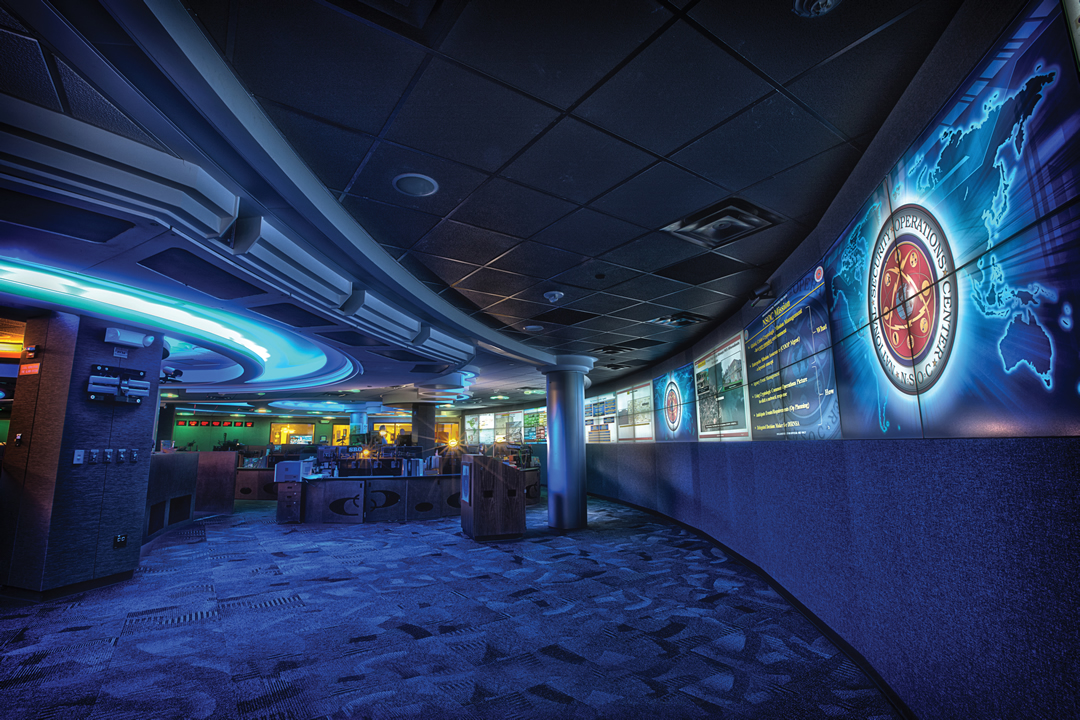
Figure 10.1 — National Security Operations Center floor, 2012. File:NSOC-2012.jpg by Unknown photographer. License: Public domain. Via Wikimedia Commons (https://commons.wikimedia.org/wiki/File%3ANSOC-2012.jpg).

4. Methods and tradecraft — the detect, triage, respond, hunt loop
The defender’s working day is structured around a four-phase loop that has the same recognizable shape across every mature SOC. The phases are detect, triage, respond, and hunt — with a feedback path from each phase back to detection engineering that closes the loop. The lifecycle is continuous, not episodic — where the white-hat engagement (Vol 6 §4) has a defined start and end, the defender’s lifecycle runs 24x7 across the calendar year. The phases overlap (an active incident’s hunt phase happens while triage continues on unrelated alerts; new detections are deployed while incident response is in flight); the diagram below is structural rather than strictly sequential.
4.1 The four-phase loop in one diagram
                       ┌──────────────────────────────────────────────────────────────────┐
                       │                                                                  │
                       │                THE BLUE-TEAM CONTINUOUS LOOP                     │
                       │                                                                  │
                       │   ┌────────────┐  ┌────────────┐  ┌────────────┐  ┌────────────┐ │
                       │   │  DETECT    │─►│  TRIAGE    │─►│  RESPOND   │─►│  HUNT      │ │
                       │   │            │  │            │  │            │  │            │ │
                       │   │ EDR/SIEM   │  │ Tier 1→2→3 │  │ NIST IR    │  │ Hypothesis │ │
                       │   │ produces   │  │ alert      │  │ lifecycle: │  │ -driven    │ │
                       │   │ alerts     │  │ enrich-    │  │ contain,   │  │ search for │ │
                       │   │ against    │  │ ment,      │  │ eradicate, │  │ what       │ │
                       │   │ telemetry  │  │ escalation │  │ recover    │  │ detections │ │
                       │   │            │  │ or close   │  │            │  │ missed     │ │
                       │   └────────────┘  └────────────┘  └────────────┘  └────────────┘ │
                       │         ▲                                              │         │
                       │         │                                              │         │
                       │         │                                              ▼         │
                       │         │       ┌──────────────────────────────┐                 │
                       │         └───────┤  DETECTION ENGINEERING       │◄────────────────┤
                       │                 │                              │                 │
                       │                 │  Write new Sigma/YARA rules; │                 │
                       │                 │  test with Atomic Red Team;  │                 │
                       │                 │  tune FP rate; deploy.       │                 │
                       │                 │  Coverage-map against ATT&CK.│                 │
                       │                 └──────────────────────────────┘                 │
                       │                                                                  │
                       │  The feedback loop:                                              │
                       │   - Hunt findings  →  new detections   (close known gaps)        │
                       │   - IR post-mortem →  new detections   (lessons-learned)         │
                       │   - Threat intel   →  new detections   (proactive coverage)      │
                       │   - Atomic Red     →  validated rules  (purple-team integration) │
                       │                                                                  │
                       └──────────────────────────────────────────────────────────────────┘
Figure 10.2 — The blue-team continuous loop. The four operational phases (detect, triage, respond, hunt) feed the detection-engineering function which produces new detections that improve the loop’s first phase. Every observation in the four phases is potential input to the engineering function; the purple-team integration (Vol 12) is the deliberate-collaboration version of the engineering function where the red team’s TTPs become the engineer’s test cases. The loop is continuous and 24x7; the diagram is structural.
4.2 Detect — the signal-to-noise reality
The detection phase is where the SIEM and EDR produce alerts based on the detection ruleset. The defender’s reality at this phase is signal-to-noise: most alerts are false positives, and most false positives have to be manually triaged before being closed. Industry benchmarking consistently puts SOC false-positive rates in the 70–95% range across most environments11; the well-instrumented environments with mature detection engineering land at the lower end of that range, the less-mature environments at the higher end. The defender’s first reality is that the alert is most likely not a true positive, and the triage discipline (§4.3) is built around handling that reality without losing the true positives in the noise.
The MTTD (Mean Time To Detect) metric is the canonical efficacy measure for the detection phase — the elapsed time between the adversary’s initial activity and the defender’s first alert on it. Industry benchmarking from the major IR-vendor annual reports (Mandiant M-Trends, CrowdStrike Global Threat Report, IBM Cost of a Data Breach) tracks median dwell times that have compressed substantially over the 2010s: Mandiant’s first M-Trends report (2011) put median dwell time at 416 days; M-Trends 2024 put global median dwell time at approximately 10 days12. The compression reflects substantial detection-side investment across the industry; it does not mean every organization has 10-day dwell times — the distribution is skewed, and unsophisticated targets still routinely have month-or-year dwell times before detection.
The detection phase has three principal modes:
- Signature-based detection — the alert fires when telemetry matches a specific signature (a YARA rule matching a known malware binary; a Sigma rule matching a specific suspicious-process-creation pattern; an IDS rule matching a known C2-protocol byte pattern). Signature detection is precise when the signature is good but blind to anything the signature doesn’t anticipate.
- Behavioral / anomaly detection — the alert fires when telemetry deviates from a baseline (this user’s process-creation pattern has changed; this host’s outbound network traffic volume has tripled; this account is logging in from an anomalous geography). Behavioral detection catches what signatures miss but generates substantial false-positive load from legitimate variation in user-and-system behavior.
- Indicator-based detection (IOCs) — the alert fires when telemetry matches a specific IP, hash, domain, or URL. IOCs are time-decayed (an IP that was malicious yesterday is just an IP today) and most useful as a short-term hunt-and-block mechanism rather than a long-term detection investment.
Mature detection programs use all three modes, with the SIEM correlating across them and the detection engineering function (§4.7) prioritizing investment based on coverage gaps and false-positive cost.
4.3 Triage — the SOC tiered structure
When an alert fires, it lands in the SOC tier-1 analyst’s queue. The tiered SOC structure is canonical across mature defender organizations:
- Tier 1 — initial triage. The tier-1 analyst’s job is to determine whether an alert is a true positive that needs further investigation or a false positive that can be closed. The decision is made on the basis of alert enrichment (additional context the SIEM and surrounding tooling pull around the alert — the user’s role, the host’s normal behavior, the source-IP’s threat-intel reputation, the time of day, similar recent alerts). The tier-1 analyst closes the false positives, escalates the suspicious to tier 2, and documents both. The tier-1 work is the highest-volume single role in the defender population; in a typical mid-sized enterprise SOC, a tier-1 analyst handles 100–500 alerts per shift depending on environment maturity and tooling.
- Tier 2 — deeper investigation. The tier-2 analyst takes the escalated alerts from tier 1 and performs detailed investigation — pivoting into the EDR for endpoint context, examining the network logs for related activity, examining identity logs for unusual sign-ins, looking for related events the original alert didn’t surface. Tier 2 decides whether the activity is benign-with-explanation (close), suspicious-but-not-active (monitor; possibly write a new detection), or active incident (escalate to tier 3). Tier-2 work is the “real investigation” tier; the analysts at this level are typically 2–4 years into their security career.
- Tier 3 — incident response. The tier-3 analyst (or the DFIR team, depending on the organization’s structure) takes confirmed-active-incident escalations from tier 2 and runs the formal incident-response process (§4.4). Tier 3 is the smallest tier numerically; the work is the most-senior in the SOC.
Some organizations operate a flatter SOC structure (modern engineering-led security organizations sometimes have a two-tier or single-tier model where all analysts handle all phases of investigation). The tiered structure remains the modal pattern in 2026 enterprise SOCs and is the structure the field’s training materials default to.
The tiered SOC structure
─────────────────────────────────────────────────────────────────────────────

                          ┌─────────────────────┐
                          │   SOC LEADERSHIP    │
                          │  (Director / Mgr)   │
                          └──────────┬──────────┘
                                     │
                  ┌──────────────────┴──────────────────┐
                  │                                     │
                  ▼                                     ▼
        ┌─────────────────┐                  ┌──────────────────┐
        │    TIER 3       │◄─escalations────│   DETECTION      │
        │  IR / DFIR /    │                  │   ENGINEERING    │
        │  threat hunt    │                  │  (rules/tuning)  │
        └────────┬────────┘                  └──────────┬───────┘
                 ▲                                       │
                 │ escalations                           │ improved
                 │                                       │ detections
        ┌────────┴────────┐                              │
        │    TIER 2       │                              │
        │  investigation  │                              │
        │  & enrichment   │                              │
        └────────┬────────┘                              │
                 ▲                                       │
                 │ escalations                           │
                 │                                       │
        ┌────────┴────────┐                              │
        │    TIER 1       │◄─────────────────────────────┘
        │  alert triage   │      detections feed alerts
        │  & enrichment   │
        └────────┬────────┘
                 ▲
                 │
        ┌────────┴────────┐
        │   SIEM + EDR    │
        │   + network +   │
        │   identity      │
        │   telemetry     │
        └─────────────────┘

  The detection-engineering function feeds the alert pipeline from the
  side; tier-1 / tier-2 / tier-3 escalation flows from bottom to top;
  incidents go back down to detection engineering as lessons-learned
  for the next round of rule improvements. Threat hunting (not shown
  in the diagram, but covered §4.6) runs alongside tier-2/3 work and
  similarly feeds detection engineering.
─────────────────────────────────────────────────────────────────────────────
Figure 10.3 — The tiered SOC structure with detection-engineering integration. The escalation path (tier 1 → tier 2 → tier 3) handles the reactive work; the detection-engineering function handles the proactive improvement. The two are connected by the lessons-learned feedback path — every confirmed incident produces detection-engineering opportunities for the next round.
4.4 Respond — the NIST IR lifecycle
When an alert is confirmed as an active incident (a real adversary in the environment), the defender executes the formal incident-response (IR) lifecycle. The canonical reference is NIST SP 800-61 Revision 2 (Computer Security Incident Handling Guide), August 201213; the lifecycle defines four phases that every mature IR practice maps onto:
| Phase | NIST 800-61 r2 name | SOC tier responsibility | Typical duration |
|---|---|---|---|
| 1. Preparation | Preparation | Detection engineering + Leadership | Continuous, before any specific incident |
| 2. Detection & Analysis | Detection and Analysis | Tier 1 + Tier 2 + Threat hunters | Hours to days; varies by incident |
| 3a. Containment | Containment | Tier 3 / IR team | Hours to days |
| 3b. Eradication | Eradication | Tier 3 / IR team + IT operations | Days to weeks |
| 3c. Recovery | Recovery | Tier 3 / IR team + IT operations | Days to weeks |
| 4. Post-Incident | Post-Incident Activity | All tiers + Detection engineering + Leadership | Weeks; the formal post-mortem |
Table 10.3 — NIST 800-61 r2 incident-response lifecycle phases mapped to typical SOC tier responsibilities. The phases overlap in practice (containment continues while eradication begins; threat hunting continues across the entire engagement); the table is structural.
The expanded phase-by-phase treatment:
- Preparation is the work done before any specific incident. Building the IR team and its retainer relationships; building the runbooks for likely incident types (ransomware, supply-chain compromise, malicious insider, business email compromise, third-party-vendor compromise); building the IR communication chain (the legal contact, the executive sponsors, the external counsel, the cyber-insurance carrier, the law-enforcement liaison, the public-affairs contact for breach disclosure); rehearsing the runbooks via tabletop exercises and red-team-versus-blue-team simulations. Preparation is what separates a mature IR practice from a reactive one.
- Detection & Analysis is the inbound phase — the alerts that fire, the analyst triage, the determination that a real incident is occurring, the initial scoping of which assets are involved, which adversary the activity is consistent with, what the likely objective is. The IR-team scoping at this phase is the input to containment planning; an incident that’s been contained before its full scope is understood often resurfaces under the same actor weeks later.
- Containment has a short-term and long-term flavor. Short-term containment is “stop the adversary’s active activity”: isolate the compromised host, block the C2 channels, disable the compromised credentials. Long-term containment is “stabilize the environment so eradication can proceed without the adversary regaining a foothold”: rotate broader credential sets, segment affected network zones, apply emergency patches to similar vulnerable systems. The containment-versus-watch tradeoff (§4.5) is the most-delicate decision at this phase.
- Eradication is removing the adversary’s presence from the environment — wiping compromised hosts, removing implanted persistence mechanisms, resetting all credentials that may have been compromised (not just the obvious ones), reviewing identity-system trust relationships for tampering. Eradication is more time-consuming than the alerting phase suggests; the well-documented adversary may have placed multiple persistence mechanisms across many hosts, and incomplete eradication leaves residual access that the adversary will exploit.
- Recovery is restoring the environment to authorized-only operation — rebuilding hosts from clean baselines (the explicit choice not to trust the wiped systems “just enough” to keep them); restoring data from clean backups; bringing affected services back online; monitoring for any sign that eradication missed something. Recovery is when the operational pressure from the business is highest — leadership wants services restored; the IR team wants confidence that the adversary is fully removed.
- Post-Incident Activity is the lessons-learned phase. The formal post-mortem; the report to the relevant stakeholders (executives, board, regulators in some industries, customers in disclosure scenarios); the updates to the detection ruleset based on what the incident revealed about the adversary’s TTPs; the updates to the runbooks based on what the response team learned about process gaps. The post-incident phase is where the defender’s response converts into improved defenses against the next incident.
The NIST 800-61 r2 lifecycle is the canonical framework; specific industries layer on top of it. PCI-DSS § 12.10 requires a documented IR plan for cardholder-data environments; HIPAA requires breach-notification within 60 days; GDPR Art. 33 requires reporting within 72 hours of awareness; NYDFS 23 NYCRR 500 requires notification to NYDFS within 72 hours for cybersecurity events; the SEC cybersecurity disclosure rules (effective December 2023) require public-company disclosure of material cybersecurity incidents within four business days14. The IR practice has to thread these various reporting regimes; the legal-and-compliance integration is increasingly the work of the IR-leader role.
4.5 The watch-before-acting discipline
One of the most-delicate IR decisions is whether to immediately remove an adversary or to observe for a period to gather intelligence. The instinct from the SOC analyst’s perspective is “kick the adversary out now” — they’re in the environment, they’re doing damage, the longer they stay the more damage they do. The IR senior’s instinct is to evaluate the trade-off:
- The intelligence value of observing: knowing the adversary’s full scope of compromise (every host they’ve touched, every credential they’ve harvested, every persistence mechanism they’ve planted); knowing their TTPs (which lets the defender write much better detections for the next round); knowing their objective (data exfiltration? lateral movement to a specific target? destructive intent?). The adversary who is removed in the first hour is often replaced in the third hour through a persistence mechanism the defender didn’t know about, because the defender didn’t observe long enough to find all of them.
- The cost of waiting: ongoing damage during the observation period; the risk that the adversary will detect the defender’s awareness and switch to a destructive mode (ransomware deployment, data destruction, leak-or-destroy); the regulatory clock running on reporting obligations; the reputational risk of “we knew and we didn’t act.”
The senior IR judgment is to make this trade-off deliberately and explicitly, with leadership awareness, rather than reflexively. The Conti chat leaks (February 2022 — Vol 7 §5.1) showed how some ransomware affiliates respond to detection: by accelerating the encryption phase before the defender can complete eradication. The defender who has been observing for too long can lose the engagement at the moment of action. The defender who acts too fast can leave persistence behind that the adversary uses to return.
The discipline has no universal answer; the working pattern in 2026 is that for commodity threats (ransomware affiliate, mass-phishing, opportunistic exploit), the defender contains immediately; for targeted threats (APT-class actor, suspected nation-state, suspected insider with deep environmental knowledge), the defender observes deliberately for some period with the senior IR judgment carrying the trade-off. The decision is rarely made by tier-1 alone; the senior-IR involvement is structural to the practice.
4.6 Hunt — the proactive search for what detections missed
Threat hunting is the proactive complement to the detection-and-respond loop. The hunter’s premise is “detections cover what we know to look for; the things we don’t know to look for are somewhere in the telemetry, waiting to be found” — and the hunter’s job is to find them.
Two principal hunting modes:
- Hypothesis-driven hunting — the hunter starts with a specific hypothesis (“an attacker who compromised an internal user has pivoted to a developer’s workstation and is reading the source-code repository”), translates the hypothesis into queries against the SIEM and EDR telemetry, and looks for evidence consistent with the hypothesis. Hypothesis-driven hunting is structured; it’s the form taught in SANS courses and used by mature hunt teams. The hypotheses come from threat-intel reports, from recent IR engagements, from ATT&CK technique-coverage gap analysis, from changes in the environment that might present new attack surface.
- Data-driven hunting — the hunter starts with an unusual pattern in the data (“this account is logging into hosts it has never logged into before”; “this set of hosts is all making DNS queries for the same recently-registered domain”) and follows the pattern to whatever’s at its source. Data-driven hunting catches threats hypothesis-driven hunting wouldn’t think to look for; it requires more comfort with the data and more time exploring without specific direction.
Hunt findings feed back into detection engineering. The hunter who finds an actual threat through a hypothesis or a pattern then writes a detection rule that catches that pattern automatically next time. The hunter’s individual finding becomes the SOC’s continuous coverage. Threat hunting is, in this sense, detection engineering’s source of new ideas — the hunter encounters real adversary behavior that the existing ruleset missed, and the next iteration of the ruleset catches it.
The “you don’t know what you don’t know” problem is the framing every senior threat hunter articulates in some form. The defender’s detection ruleset captures the known threat surface; the unknown threat surface is by definition outside the ruleset. Hunting is the bounded acknowledgment that the ruleset is incomplete and the deliberate effort to find what’s outside it. The 2026 mature hunt teams operate on a sprint cadence (1–2 hunt cycles per month, each focused on a specific hypothesis or data pattern), with findings documented and detection-rule additions tracked across cycles.
4.7 Detection engineering — the closing of the loop
Detection engineering is the function that turns observations from the rest of the loop (hunt findings, IR post-mortems, threat-intel inputs) into deployed detection rules that the SOC catches the next round on. The discipline has matured substantially across the 2020s into its own career track (§6); the working practice has stabilized around four-or-five repeating sub-activities:
- Identify the adversary behavior to detect. From threat-intel report, hunt finding, IR post-mortem, or ATT&CK-coverage gap analysis. The starting point is a specific TTP — “credential extraction from LSASS via direct memory read,” “phishing-page DNS pattern matching the recent campaign,” “lateral movement via WMIC to remote hosts.”
- Write the detection rule. In Sigma (for telemetry-event detections), YARA (for binary-pattern detections), or the SIEM’s native language (where Sigma isn’t yet appropriate). The rule expresses the detection logic in a form the SIEM or EDR can evaluate against live telemetry.
- Test the rule in a controlled environment. Run the corresponding Atomic Red Team test (or a custom red-team simulation) in a lab environment and verify the rule fires. Validate the rule fires only when the test runs (no obvious false-positive triggers from normal activity). Capture the rule’s expected behavior in test documentation.
- Tune the rule for false-positive rate. Deploy to a staging environment or a low-priority alerting tier; observe the false-positive rate over several days; tune the rule (additional exclusions, refined matching criteria, threshold adjustments) until the false-positive rate is acceptable for production deployment.
- Deploy to production. Move the rule to the production alerting tier; monitor its performance over time; revisit when false-positive rate climbs or when the underlying environment changes in ways that affect the rule.
The detection-engineering function is, in this sense, the deliberate-engineering practice of the defender’s role. Where the SOC tier-1 is reactive and the threat hunter is exploratory, the detection engineer is productive — they produce the artifacts (detections, the test cases, the documentation) that the rest of the function consumes. The 2026 mature detection-engineering teams operate the function like a software-engineering team: rules in Git, code review on every change, automated testing in CI, deployment via pipeline, regression monitoring. Less-mature shops still write rules directly in the SIEM UI; the maturity gap is one of the visible distinctions across organizations.
The detection-engineering work is also the purple-team feedback loop in practice — the red team’s TTPs become the engineer’s test cases; the engineer’s rules are validated by the red team’s emulation; the closed loop produces measurably improved detection coverage. Vol 12 will walk the purple-team practice as the deliberate-collaboration form of this loop.
4.8 The alert fatigue reality
A subsidiary observation worth flagging because it dominates the working day of the tier-1 analyst: most SOCs run with substantial alert fatigue. The combined output of a typical SIEM-and-EDR stack against a typical enterprise environment is 100–10,000+ alerts per day depending on size and ruleset; the false-positive rate is, as §4.2 noted, 70–95% across most environments. The tier-1 analyst’s working reality is hundreds of alerts that mostly aren’t true positives, with the discipline of taking each one seriously even though most won’t be.
Alert fatigue is the human-attention-as-bottleneck problem. The SOC analyst who has closed 200 obvious false positives this shift has a higher probability of misclassifying the 201st — even if the 201st is the true positive — because attention has degraded. The mature SOC responses include:
- Detection-engineering investment to reduce the alert volume at the source. Better rules with lower false-positive rates. Aggressive tuning of high-volume noisy detectors. Removal of detections that have not produced true positives over their lifetime.
- Tier-1 automation — letting the SIEM or SOAR (Security Orchestration, Automation, and Response) platform handle the obvious false positives without analyst attention. The 2020s tooling for this includes Splunk SOAR (formerly Phantom), Microsoft Sentinel’s playbook automation, Tines, and the broader SOAR market. The discipline is to automate the enrichment (gather the additional context an analyst would gather) and the initial-classification (does this alert match patterns we’ve already determined to be benign?), letting the analyst focus on the alerts where automation can’t make the determination.
- Workflow and queue management — letting the SOC analyst work in shorter focused bursts, rotating the alert queue across analysts, keeping the per-shift alert load bounded.
The 2026 enterprise SOC’s combined defensive posture is, in practice, a continuous trade-off between detection coverage (broader ruleset; more potential to catch sophisticated threats; more false positives) and alert-handling capacity (the analyst-attention budget available to investigate the alerts that fire). The trade-off is rarely fully resolved; it’s continuously rebalanced.
5. A day in the life
Three composite narratives for three flavors of the defender role. As with Vol 6 §5 and Vol 7 §5, none of these are real individuals; all are recognizable in the working population.
5.1 A tier-1 SOC analyst’s 8-hour shift
Aisha is 26, two years into her first security role at a regional managed-services provider’s SOC. She works a rotating 12-hour shift schedule — three days on, three days off — and tonight is night two of a Tuesday-Wednesday-Thursday rotation. The SOC covers approximately 40 client organizations, ranging from a regional credit union to a couple of healthcare practices to a manufacturing firm; the analysts work the combined alert queue across all of them, with client-specific context surfaced in the alert enrichment.
8:00 PM. Shift turnover from the day team. The outgoing tier-1 analyst walks her through the current open queue — three escalated incidents in progress (one with the tier-2 team, two waiting for client-confirmation responses), about 45 unresolved alerts in the triage queue, two recurring false-positive patterns to keep an eye on (a client’s vulnerability-scanning vendor is doing scheduled scans that are firing alerts; a healthcare client’s MRI-machine PACS gateway is exhibiting unusual behavior that the client’s IT director has confirmed is legitimate). Turnover takes 20 minutes; Aisha logs into the SIEM and the EDR consoles, pulls the queue into her active filter, and starts working.
8:30 PM. First alert. A login-from-unusual-geography alert against a client’s M365 tenant — the user (a regional sales manager) is logged in from a country they haven’t logged in from before. Aisha pivots into the EDR to check the workstation’s status, into the SIEM to look for related identity events, into the threat-intel lookup tool to check the source IP’s reputation. The source IP is a cloud-provider IP (AWS); the user is registered as “regional sales manager — Europe”; the login geography is consistent with travel. She checks recent emails to/from the user for travel-related signals — there’s a recent corporate-travel-booking confirmation matching the dates. The alert is a true-positive in the sense that the geography did change, but the change is legitimate. She closes the alert with the enrichment (“legitimate business travel; travel booking confirmed; user verified via secondary channel”), updates the user’s normal-location model for the SIEM’s baseline, and moves on.
8:55 PM. Second alert, escalating in priority. A Sysmon EventID-10 (ProcessAccess) event on a healthcare client’s workstation, targeting lsass.exe, with access masks consistent with credential-extraction tooling (the Sigma rule from §3.1’s example). The source process is mimikatz.exe — not even renamed to disguise itself. Aisha’s reaction is immediate: this is either an active intrusion or an authorized red-team engagement she wasn’t told about. She immediately isolates the host via the EDR (the SOC’s procedure for any unambiguous credential-extraction event is “isolate first, investigate after”), escalates to the on-call tier-2 analyst, and pages the client’s on-call IT contact through the standard escalation channel.
9:05 PM. Tier-2 analyst Marcus picks up the call. He’s been a tier-1 for three years and a tier-2 for nine months. He pulls the full host context from the EDR; the workstation belongs to a senior radiology administrator; the process tree shows mimikatz.exe was spawned by cmd.exe, spawned by notepad.exe, spawned by outlook.exe. The signature is a phishing-driven malicious-document foothold — Outlook opened a Word doc that spawned the rest. Marcus checks for related host activity: a connection to an unfamiliar external IP on port 443 in the last 30 minutes, matching the Cobalt-Strike-beacon TLS fingerprint pattern from CrowdStrike’s recent ransomware-affiliate intelligence. This is an active intrusion. Marcus calls Aisha on the SOC’s internal channel: “you did exactly the right thing isolating the host; I’m escalating to tier-3 now; please escalate the client to formal incident response.”
9:15 PM. The client’s IT director is on the phone with the tier-3 IR lead. The conversation is short: this is a formal incident, the IR team is taking over the investigation, the client needs to engage their cyber-insurance and notify their legal counsel. Aisha logs the time of the IR engagement start in the incident ticket and returns to the queue.
9:30 PM. Back to the routine queue. The next four alerts are routine — a fired antivirus signature on a quarantined file (true positive, but the file was already quarantined; close); a brute-force-against-RDP alert against a host that’s already behind the firewall’s geo-blocking (false positive in the sense that the attack didn’t reach the host; document the pattern for the SOC’s tracking); a phishing-email-detected alert (true positive — phishing email blocked; user notified; routine close); a DNS-anomaly alert against a workstation querying a recently-registered domain (suspicious; pivot to look at the workstation; the workstation is a marketing user’s laptop; the domain is the registration for a new vendor the user has been working with; close with enrichment).
10:30 PM. Aisha takes her first break. 30 minutes — sandwich and a walk around the building. The night-shift work is more physically demanding than the day shift in some ways; staying alert past midnight requires the discipline of taking the breaks even when the queue is busy.
11:00 PM through 4:30 AM. The routine continues. Five more alerts an hour on average; most are false positives or low-severity true positives that need only minor enrichment. The night queue is quieter than the day queue in absolute volume, but the tier-1 alone shift means she’s handling all of them rather than splitting with peers. She closes approximately 35 alerts across the night, escalates one additional alert to tier-2 (a suspicious-PowerShell-execution alert that turns out to be a vendor’s authorized administrative-automation script, but Marcus’s tier-2 review is the appropriate confirmation), and updates the SIEM’s tuning notes for two patterns she keeps seeing.
4:30 AM. The 9:15 PM incident’s situation report comes in. The IR team has the scope contained — the affected workstation is isolated; the credentials the radiology administrator could have had access to are being reset; the unfamiliar external-IP destination has been blocked at the perimeter; the broader scoping for lateral-movement evidence is ongoing. The IR engagement will continue for several days; Aisha’s role in it was the first 15 minutes (identify, isolate, escalate). The fact that she got those 15 minutes right materially shaped the incident’s trajectory — the IR-team lead will write that in the post-mortem.
8:00 AM. Shift end. Turnover to the day team takes another 20 minutes. The day-shift analyst will pick up the queue and continue. Aisha drives home — her actual sleep schedule is “noon to 7 PM” on rotation days, which is the part of SOC tier-1 work that’s hard on long-term health. She makes a note in the SOC’s training-notes channel about the Mimikatz alert investigation for the team’s collective knowledge base.
The night described here is representative. A typical tier-1 shift handles 200–500 alerts depending on environment maturity; 1–3 of those will escalate to tier-2; 0.1–0.5 of those will become formal incidents. The math is brutal: of a thousand alerts a tier-1 sees in a week, perhaps 5–10 are true positives that matter and perhaps one becomes a formal incident. The discipline of treating all 1,000 with the same triage rigor — knowing that the failure mode is missing the one that matters in the noise of the 999 that don’t — is the SOC tier-1’s working reality.
5.2 A DFIR specialist mid-incident — hour 48 of a breach response
Jasmine is a senior DFIR consultant at a mid-sized incident-response firm. She’s been at this firm five years; before that she was an in-house IR engineer at a financial-services company. Her phone rang Sunday evening at 7:14 PM with a P1 engagement: a manufacturing client (the firm’s largest in that vertical) had just discovered ransomware encryption in progress on their production network. Jasmine was on the engagement call by 7:45 PM; she was on a flight Sunday night; she’s been in the client’s facility for 48 hours.
Tuesday morning, 11:30 AM. Jasmine is on her second coffee of the morning, in the client’s conference room which the IR team has converted into a war room. The room has three rolling whiteboards (one for the incident timeline, one for the host-by-host investigation status, one for the open questions and decisions), a large display showing the consolidated forensic-timeline view (Plaso output piped through Timeline Explorer), and four laptop workstations at various stations along the table. The client’s CISO is at the table; their CIO is on speakerphone; the firm’s IR lead (Jasmine’s manager) is on video from the firm’s headquarters; a representative from the client’s cyber-insurance carrier is in the room as observer.
The morning meeting opens with Jasmine’s timeline update. The forensic reconstruction has been the main work of the last 36 hours. The initial intrusion was 47 days before the ransomware deployment — a phishing email that compromised a manufacturing engineer’s credentials; lateral movement through the engineer’s workstation to the firm’s Active Directory domain controller; subsequent privilege escalation to Domain Admin; persistent foothold across six additional hosts (identified through host-by-host investigation; the IR team’s host count is currently 73 of approximately 4,000 hosts in the environment that need to be analyzed); credential extraction across the AD database; substantial data exfiltration (approximately 280 GB over the 47-day dwell time, identified through netflow review and the cloud-storage-account abuse pattern); and the ransomware-deployment trigger Sunday evening.
The CISO asks the key strategic question: is the data-exfiltration leak inevitable? Jasmine’s answer is yes; the data is in the adversary’s possession (confirmed by the leak-site posting the adversary made overnight to coerce the ransom payment); the question is whether the client pays the ransom in the hope (not guarantee) of preventing the leak. The client’s general counsel and the cyber-insurance carrier are in a separate conversation about that decision; Jasmine’s role is to inform the decision, not to make it.
The technical work continues through the morning. Jasmine is running Velociraptor queries across the remaining unanalyzed hosts to identify additional persistence; the IR junior analysts are walking through the AD logs to identify all the accounts the adversary touched and which need to be reset; the network team is pulling Arkime PCAP for the relevant time windows to identify all the C2 destinations the adversary used. The work is methodical; everyone in the room has done this before; the rhythm is “make sure nothing’s missed, even though the urgency wants you to move fast.”
Around 1:00 PM the client’s IT director identifies a new host that wasn’t in the previous IR-team scope — a server hosting the firm’s quality-management system that the client hadn’t initially listed as production-critical. The IR team’s host count expands to 74; Jasmine pivots to the new host’s analysis as the priority.
By 4:00 PM the QMS host’s analysis is complete: the adversary touched it on day 19 of the dwell time, harvested credentials, didn’t deploy ransomware on it (perhaps because it wasn’t on the encryption target list, perhaps because the adversary missed it). The credentials are added to the reset list; the host is rebuilt from clean baseline.
The 6:00 PM end-of-day meeting is the next strategic decision point. The eradication is approximately 65% complete by the IR team’s estimate; full eradication will take another 3-5 days. The CISO is feeling the pressure to declare the incident “contained” so the executive team can communicate to the board; Jasmine pushes back on that framing. Containment in the IR sense means the adversary’s active operations are halted; the IR team is comfortable with that claim. Eradication means the adversary’s residual access is fully removed; that’s not done. Recovery means production-state operation is restored from clean baselines; the client is currently operating in a degraded-but-functional state, with manufacturing throughput at approximately 40% of normal capacity because the QMS host has been offline. The honest framing is “contained, eradication in progress, partial recovery, restoration on track for 7-10 days.”
The CISO accepts the framing. The cyber-insurance carrier’s representative confirms that the framing is consistent with what the firm needs for the regulatory notifications.
Jasmine wraps her day at 8:30 PM. She’ll be on-site for another five days; the engagement will likely run three weeks total. After the formal incident concludes, there’ll be a post-incident report; the post-mortem with the client’s leadership; the broader engagement-closeout activities. The total IR engagement will be approximately $400,000 in IR-firm billings, against an incident whose total cost to the client (operational disruption, ransom-paid-or-not, regulatory exposure, customer notification, brand impact) will probably be in the eight-figure range.
DFIR work is engaged, intense, and time-bounded in a way that SOC tier-1 work is not. The engagements are sprint-cycle weeks-long; the days are long but the cycle ends. The skill development is steeper than tier-1 because every engagement is a different adversary, a different environment, a different problem. The senior DFIR practitioner’s compensation reflects that the work is hard and the supply of practitioners who can lead an engagement is bounded.
5.3 A detection engineer’s sprint — building rules from a threat-intel report
Eric is a senior detection engineer at a large financial-services company. He’s six years into his career; he was a SOC tier-1 for two years out of school, a tier-2 for two more, and has been detection-engineering for the last two. The firm’s detection-engineering team has six people; Eric is one of the two seniors.
Tuesday morning. The team’s two-week sprint started Monday. Eric’s current sprint focus is a CrowdStrike threat-intel report from last Friday on a ransomware affiliate that’s been targeting financial-services organizations. The report includes a detailed walk through the affiliate’s TTPs — initial access via business-email-compromise, privilege escalation via a specific Active Directory misconfiguration the affiliate routinely abuses, persistence via a specific custom-loader the affiliate uses, lateral movement via WMIC-and-SMB, credential extraction via a Mimikatz variant with specific behavior, and the ransomware deployment via a specific Cobalt Strike Beacon configuration. The report includes the MITRE ATT&CK technique identifiers for each step.
Eric’s first work is to map the report’s TTPs against the firm’s existing detection coverage. He pulls up the firm’s MITRE ATT&CK Navigator visualization (the team maintains it as living documentation) and walks through each of the report’s techniques: which are already covered by existing rules, which have partial coverage, which are gaps. Of the affiliate’s nine principal techniques, the team has good coverage on five, partial coverage on two, and gaps on two. The two gaps are the sprint’s primary objectives.
By Tuesday afternoon Eric has the first new Sigma rule drafted — for the affiliate’s Active Directory misconfiguration abuse technique. The rule is YAML; it took him about 90 minutes to write, drawing on the threat-intel report’s technical detail, the firm’s AD-environment specifics, and the SigmaHQ community rules for similar patterns. He commits the rule to the team’s Git repository as a draft and opens a pull request for peer review by another detection engineer.
Wednesday morning. Eric runs the Atomic Red Team test for the corresponding ATT&CK technique against the firm’s lab environment. The test executes the technique under controlled conditions; Eric checks whether his new Sigma rule fires in the lab’s Splunk instance. It does, with the expected enrichment. He documents the test-fire confirmation in the rule’s PR description.
Wednesday afternoon. The peer review comes back with two suggestions: one tightens the rule’s matching criteria to reduce a potential false-positive pattern Eric had missed; the other adds an additional exclusion for a legitimate administrative tool. Eric incorporates both, re-tests, and updates the PR.
Thursday morning. The rule is deployed to the firm’s staging-tier SIEM instance — production-grade telemetry, separate alert queue. Eric monitors the staging output for the next two days, checking that the rule fires only when the corresponding behavior occurs and doesn’t fire on routine activity.
Friday afternoon. The staging-tier monitoring shows no false-positive fires across the two days. Eric promotes the rule to production. The deployment pipeline updates the production SIEM ruleset; the rule is now part of the firm’s live detection coverage. He documents the rule’s deployment in the team’s running detection-engineering log; he updates the ATT&CK Navigator visualization to show coverage now exists for that technique.
The second sprint gap — the affiliate’s custom-loader persistence technique — is Monday’s work. The pattern across the sprint is the same: identify the gap from threat-intel input, draft the rule, test in lab with Atomic Red Team, peer review, deploy to staging, monitor, promote to production. Each rule takes roughly a day of focused work plus the staging-monitoring window; the team’s collective output is approximately 8-12 new or substantially-improved rules per two-week sprint.
The detection-engineering role is structurally different from the SOC tier-1’s reactive work or the DFIR practitioner’s incident-driven work. The pace is sprint-cyclical; the work is software-engineering-shaped (Git, peer review, automated testing, deployment pipeline); the metric of productivity is “new detection coverage delivered” rather than “alerts closed” or “incidents responded to.” The role is the rising career track in the defender population — pay bands are competitive with senior pentester pay; the work is intellectually steady; the impact is measurable through ATT&CK-coverage delta over time.
Three defender working rhythms — the comparison. Aisha’s tier-1 12-hour shift is reactive, queue-driven, fatiguing-by-volume; the work’s contribution is the 1-in-1000 alerts where the right triage decision shapes a real incident. Jasmine’s DFIR engagement is intense, multi-week, methodical-under-pressure; the work’s contribution is the breach-response trajectory that determines how much damage a real adversary actually does. Eric’s detection-engineering sprint is proactive, sprint-cyclical, software-engineering-shaped; the work’s contribution is the new detection coverage that catches the next adversary before they get to the breach stage. Each is unambiguously a defender working mode; the differences are in pace, scope, and the surrounding work structure.
6. How they get hired
The defender hiring market in 2026 has different structural features from the offensive hiring market (Vol 6 §6) — different cert ladder, different career arc, different compensation curve. This section walks the defender-specific path.
6.1 The defender cert ladder
The certifications relevant to defender roles differ from the offensive ones (OSCP, PNPT, CRTO from Vol 6 §6.1) in two significant ways: the practical-vs-multiple-choice distinction is less pronounced (most defender certs have substantial multiple-choice components even at high tiers), and the procurement-driven recognition is stronger (defender roles in government and contractor space have hard cert requirements that the practitioner-respected hands-on alternatives don’t yet satisfy).
| Cert | Provider | Format | Approximate cost (early 2026) | Industry weight | When useful |
|---|---|---|---|---|---|
| CompTIA Security+ | CompTIA | Multiple-choice + performance items, 90 min | ~$392 exam | Foundational; DoD 8140 baseline | The on-ramp cert; required for DoD-contractor entry-level roles; widely recognized as HR filter |
| CompTIA CySA+ | CompTIA | Multiple-choice + performance items | ~$404 exam | SOC-focused entry | The CompTIA SOC-analyst-track cert; recognized in commercial enterprise and government |
| SANS GIAC GCIH (Certified Incident Handler) | SANS / GIAC | 4-hour proctored exam | $8,000+ with SANS SEC504 course; $2,499 exam-only retake | High — practitioner-respected for IR roles | The canonical incident-handling cert; widely required in enterprise IR roles |
| SANS GIAC GCFA (Certified Forensic Analyst) | SANS / GIAC | 4-hour proctored exam | $8,000+ with SANS FOR508 course | High — practitioner-respected for forensics | The forensics-track cert; widely required for senior DFIR consulting roles |
| SANS GIAC GCFE (Certified Forensic Examiner) | SANS / GIAC | Proctored exam | $8,000+ with SANS FOR500 course | High — entry forensics | The Windows-forensics-focused cert; entry-mid DFIR |
| SANS GIAC GCDA (Cyber Defense Analyst) | SANS / GIAC | Proctored exam | $8,000+ with SANS SEC555 course | Rising — detection engineering and SIEM | The SIEM-and-detection-engineering-track cert |
| SANS GIAC GMON (Continuous Monitoring) | SANS / GIAC | Proctored exam | $8,000+ with SANS SEC511 course | Mid — SOC-and-monitoring | The continuous-monitoring-track cert |
| SANS GIAC GREM (Reverse Engineering Malware) | SANS / GIAC | Proctored exam | $8,000+ with SANS FOR610 course | High — malware analysis | The malware-analysis-track cert |
| SANS GIAC GNFA (Network Forensic Analyst) | SANS / GIAC | Proctored exam | $8,000+ with SANS FOR572 course | Mid — network forensics | The network-forensics-track cert |
| EC-Council CHFI (Certified Hacker Forensic Investigator) | EC-Council | Multiple-choice | ~$1,200 exam | Low-to-mid; DoD 8140 listed | EC-Council’s DFIR-track cert; like CEH it has procurement recognition without strong practitioner respect |
| (ISC)² CISSP | (ISC)² | Multiple-choice across 8 domains | ~$749 exam + maintenance | High for management; mocked by practitioners | CISO and security-architect roles; managerial signaling |
| (ISC)² CCSP (Certified Cloud Security Professional) | (ISC)² | Multiple-choice | ~$599 exam | High for cloud-security roles | Cloud-security-specific (architectural / managerial) |
| CompTIA CASP+ | CompTIA | Multiple-choice + performance | ~$494 exam | Mid; senior IT-security | CompTIA’s senior-track cert; DoD 8140 listed |
Table 10.4 — The defender cert ladder as of early 2026. Pricing changes frequently. The SANS GIAC family dominates the practitioner-respected defender certs in 2026; the cost is substantial (a SANS-trained team is an enterprise budget item). The CompTIA family (Security+, CySA+) is the cost-accessible alternative for individual learners and DoD-contractor entry. The (ISC)² CISSP retains the managerial-and-architectural recognition. The EC-Council certs (CHFI; the security-analyst-track) have procurement recognition driven by DoD 8140 listings without strong practitioner respect.
The defender cert ladder differs from the offensive cert ladder primarily in the prominence of SANS GIAC. The GIAC family is, in 2026, the canonical practitioner-respected defender credentialing; a working SOC team’s senior analysts and IR responders are typically GCIH-holders, the DFIR specialists are GCFA-holders, the threat hunters and detection engineers increasingly hold GCDA or GMON. The financial barrier (SANS courses run $8,000+ each with the cert included) means most GIAC certifications are organization-sponsored rather than individual-paid. An aspirational defender’s strategy is often to land an entry-level SOC role with a Security+ and CySA+, then leverage the employer’s training budget to earn the GCIH and GCFA over the first 3-5 years.
A subsidiary observation: the Blue Team Labs Online (BTLO) platform and the CyberDefenders platform provide hands-on defender-track learning environments that complement the certification path — DFIR challenges, malware-analysis challenges, threat-hunting scenarios. The BTLO platform’s role for defender learners parallels HackTheBox’s role for offensive learners (Vol 9 §3.2). Portfolio-style demonstration through these platforms is valued by hiring managers in the same way Vol 9 §6.2 described for the offensive side.
6.2 Entry-level reality — the SOC tier-1 starting point
The modal entry into defender work is the SOC tier-1 role. The path:
- The job market. Entry-level SOC tier-1 roles are reasonably abundant in 2026 (more so than entry-level offensive roles, where the OSCP-or-equivalent prerequisite gates harder). Major managed-security-services providers (Arctic Wolf, Huntress, Red Canary, Expel, Rapid7 MDR, the threat-intel vendors’ MDR offerings) are continuously hiring tier-1 analysts; major in-house SOCs (in financial services, healthcare, large tech, government contractors) maintain rotating tier-1 hiring. The cert and portfolio requirements are typically modest: Security+ or CySA+, basic SIEM familiarity (often “Splunk Fundamentals” or “KQL Basics” certification or equivalent demonstrated learning), a couple of TryHackMe / BTLO / CyberDefenders defender-track completions, working knowledge of the major EDR products from coursework or homelab practice.
- The compensation reality. Entry-level SOC tier-1 compensation in the US in 2026 lands in the $55,000–$75,000 range, with the higher end in major metropolitan areas, in financial services, and at the top MDR providers. This is the same band Vol 9 §6.3 reported for the entry-level offensive role; the entry-level pay is similar, but the trajectory differs. Outside the US the bands are lower (UK £30,000–£45,000; EU €35,000–€50,000; varies by country).
- The “earn your stripes” tier-1 → tier-2 progression. The typical advancement timeline is 12–24 months from tier-1 to tier-2, with the variable being how proactive the analyst is in skill-building and how active the employer is in promoting. The tier-1 → tier-2 transition is often the steepest single career step in the defender population — the work shifts from queue-driven reactive triage to deeper investigative work, the compensation jumps substantially (the tier-2 band is $75,000–$100,000), and the path to senior roles opens up.
- The night-shift reality. SOC tier-1 work runs 24x7, which means most entry-level analysts rotate through night shifts (overnight 8-hour or 12-hour shifts; sometimes weekend coverage). The schedule is hard on long-term health and on personal life; the better employers offer rotation schedules with adequate recovery time (the 3-day-on / 3-day-off pattern Aisha’s composite in §5.1 walked is one common pattern). The night-shift compensation premium is real but modest (typically 5–10% above day-shift base for the same role).
6.3 Specialization paths beyond SOC tier-1
The defender population branches into specialization tracks after the initial SOC tier-1 → tier-2 progression. The five principal paths:
| Path | Typical 2026 mid-career role | Typical comp (US, mid-career) | Skills emphasized | Cross-reference |
|---|---|---|---|---|
| DFIR specialist | Senior DFIR consultant or in-house IR engineer | $110,000–$160,000 | Forensics tooling, IR runbooks, evidence handling, breach-response leadership | §3.6; §5.2; §7.3 Sarah Edwards |
| Threat hunter | Senior threat hunter or hunt team lead | $115,000–$165,000 | Hypothesis-driven investigation, SIEM expertise, deep ATT&CK familiarity | §4.6; §7.5 Lesley Carhart (industrial-OT hunting) |
| Detection engineer | Senior detection engineer or DE team lead | $120,000–$180,000 | Sigma authoring, ATT&CK coverage mapping, software-engineering practice (Git, CI, peer review) | §3.5; §4.7; §5.3; §7.4 Florian Roth |
| Threat-intel analyst | Senior threat-intel analyst or TI team lead | $115,000–$170,000 | Adversary tracking, primary-source research, attribution methodology, OSINT, STIX/TAXII | §3.4; §7.2 John Lambert (MSTIC-class work) |
| Cloud security / identity security | Senior cloud security engineer | $130,000–$200,000 | AWS / Azure / GCP security posture, identity-system tradecraft, cloud-native detection | §3.4 (Defender for Cloud); cross-ref Vol 16 |
Table 10.5 — Defender specialization paths in 2026. Compensation figures are US-market mid-career estimates; verify against current salary surveys (SANS, ISC², LinkedIn). The five paths are not mutually exclusive — many senior defenders span two or three over their careers (a DFIR specialist who also hunts; a detection engineer who also handles cloud-security work). The cross-references point to the volume sections and the famous-figure profiles (§7) that illustrate each path. Cloud security is the rising compensation band; entry into it typically requires existing infrastructure or development background plus security specialization rather than pure SOC-tier-1 → specialization progression.
The defender’s mid-career-to-senior trajectory matches the offensive side’s compensation trajectory more closely than the entry-level numbers suggest. By mid-career, a senior defender at any of the five paths is in the same compensation band as a senior pentester; by senior career, both populations converge to comparable bands. The early-career compensation gap (offensive entry at $60-80k vs. defender entry at $55-75k) closes in the first 5-7 years.
A subsidiary path worth flagging: the IR consulting career. A senior DFIR specialist often moves into consulting after several years of in-house IR work — the major IR firms (Mandiant/Google, CrowdStrike Services, Verizon DBIR / Verizon Threat Research Advisory Center, Kroll, Stroz Friedberg, the partner-of-record IR shops) offer senior-consultant roles that compensate well above the in-house equivalent (the IR billing rate model supports it) at the cost of substantial travel, intense engagement weeks, and the consulting-firm-specific lifestyle. The DFIR-consulting path is comparable to the pentest-consulting path Vol 6 §6.4 described; the senior practitioners often span both over their careers.
6.4 The Microsoft BlueHat path — the second meaning revisited
The Microsoft BlueHat program (§2.2) provides a second, parallel, structurally-different “blue hat” path that’s worth briefly walking. The path is:
- Establish white-hat researcher credentials through published research on Microsoft products — Windows kernel internals, browser engine work, Office attack surface, Azure platform research. The path is the standard white-hat-research-track (Vol 6 §6) with a Microsoft-product focus.
- Earn invitation to BlueHat or BlueHat IL based on published research. The invitation comes from the Microsoft Security Response Center (MSRC) and the BlueHat organizing team; invitations are extended to researchers whose work has substantive interest to Microsoft’s internal engineering teams. The bar is high; the typical invited speaker has multiple CVE-level findings or research-paper-level publications on Microsoft products.
- Participate in the BlueHat conference as an invited presenter — the format is briefings to Microsoft engineering teams in the morning, broader-conference talks in the afternoon. The community visibility from BlueHat is substantial; conference-speaker status is the visible artifact.
The BlueHat path is, in this sense, a white-hat-research-track destination, not a separate career. The “blue hat” designation is an invitation Microsoft extends; the underlying career is research, vulnerability disclosure, and conference speaking — fundamentally white-hat-on-Axis-1 with a research-role-on-Axis-2 (Vol 6’s framing). The defender-meaning blue hat (the subject of the rest of this volume) is a substantively different career; the BlueHat-meaning blue hat is a recognition for established researchers.
The two paths can converge — a researcher who has done substantive work on Microsoft Defender (the EDR product, not the brand name) might be invited to BlueHat in the researcher role while also being employed as a defender (perhaps at Microsoft, perhaps at a customer organization using Defender heavily). The career paths are distinct; the same individual can occupy both.
6.5 The portfolio for defender newcomers
What hiring managers actually weigh for defender roles, separate from certs:
- A SOC-platform-fluency demonstration. Splunk Fundamentals certification, KQL Basics, Elastic Certified Analyst, or equivalent demonstrated learning. The minimum signal is “this candidate can write basic queries against a SIEM without being walked through the syntax.”
- A defender-track portfolio. BTLO, CyberDefenders, TryHackMe defender paths, SANS Cyber Aces (free intro material), Microsoft Learn Defender modules. Sustained completion across multiple platforms is the signal.
- A homelab with defender instrumentation. Building a homelab that includes a SIEM (often Wazuh or a free-tier Elastic SIEM), an EDR (often Microsoft Defender free or Wazuh’s agent), a vulnerable-target environment (the offensive-side standard from Vol 9 §3), and writing detections that catch the attacks. The portfolio artifact is “here’s the detection I wrote for technique X; here’s the Atomic Red Team test I ran; here’s the alert it fired.” This is the defender-side equivalent of the CTF writeup.
- Public detection-engineering work. Contributing Sigma rules to the SigmaHQ community repository; publishing detection-engineering blog posts; presenting at Blue Team Village (the BSides and DEF CON village circuit’s defender-friendly venue); contributing to YARA Forge or similar open-source rulesets. Public detection work is the defender-side equivalent of the public CTF writeup or bug-bounty submission; it builds the same kind of working-portfolio visibility.
- A Microsoft Learn / AWS Security certification path completion. Cloud-security-track learning has substantial signal for the cloud-security specialization path (§6.3). Microsoft Learn’s free defender-track modules (Microsoft Sentinel SC-200 prep; Microsoft Defender SC-300 prep; Azure security AZ-500 prep) and the equivalent AWS / Google Cloud free paths are the structured-learning baseline.
The defender’s portfolio is, in 2026, a recognizable artifact set — different from the offensive portfolio in detail but the same in function. The hiring manager looks for demonstrated capability through the portfolio after the cert filter is passed. Vol 18 (Careers) will treat the portfolio synthesis across all the hats.
7. Famous figures
Five figures whose work illustrates substantive flavors of the defender career arc. The selection emphasizes practitioners whose contribution is structural — they built the institutions, the tooling, or the practices that other defenders work inside of — rather than those whose contribution was a single notable incident. Career role claims in the profiles below are accurate as of early 2026; verify current employer via the cited footnote primary sources before relying on this for outreach.
7.1 Brian Krebs — the defender-advocate journalist
Brian Krebs is not a working defender by job title. He is, instead, the canonical figure for the defender-advocate voice in cybersecurity journalism — the investigative reporter whose work on cybercrime, breaches, and threat-actor identification has, for two decades, served as a kind of public-information arm for the defender community. Krebs spent 14 years at the Washington Post covering security and technology (from approximately 1995 through 2009), and has run KrebsOnSecurity (krebsonsecurity.com) as an independent publication since December 200915. The site is, in 2026, one of the most-cited security-news outlets globally.
His 2014 book Spam Nation (Sourcebooks) is a long-form journalistic treatment of the pharmacy-spam economy of the late 2000s and early 2010s — including the rivalry between the Rx-Promotion and GlavMed spam networks, the operators behind them, and the broader criminal-economy infrastructure that supported the spam industry of the era16. The book is widely cited as an early systematic public-record treatment of the criminal-economy structure that Vol 7 §6 walks at depth. His broader investigative work has included the original public reporting on multiple major breaches (the 2013 Target breach, the 2014 Home Depot breach, several of the broker-and-affiliate ransomware operations covered in Vol 7), and the controversial-by-design practice of identifying suspected threat actors publicly. The latter practice has produced real-world consequences — Krebs has been subjected to “swatting” attacks (false emergency calls dispatching armed police to his home), DDoS attacks against his publication (the 2016 Mirai-botnet attack against KrebsOnSecurity was, at the time, one of the largest DDoS events in internet history at approximately 620 Gbps), and other forms of retaliation that demonstrate the real risk of his work.
Why he matters for this volume: Krebs exemplifies the defender-adjacent journalism that the defender community relies on for public-record context about threat actors, criminal economies, and incident attribution. Working SOC analysts and IR specialists routinely cite KrebsOnSecurity in their internal investigations as a primary source for threat-actor profiles and ongoing-campaign tracking. The framing of his role here is “defender-advocate voice,” not “defender practitioner” — he doesn’t run a SOC or lead breach engagements, but he provides the public-record infrastructure that defender practitioners draw from. The journalism-practitioner boundary matters; Krebs is rigorous about it; the field’s appropriate framing of his contribution should be too.
7.2 John Lambert — the Microsoft Threat Intelligence architect
John Lambert is the canonical figure for institutional threat-intelligence and detection engineering at vendor scale. Lambert joined Microsoft in 2000 and has spent the entirety of his career there; he founded the Microsoft Threat Intelligence Center (MSTIC) as the operational threat-intelligence arm of the broader Microsoft Security Response Center (MSRC) lineage. MSTIC has, since its formation, become one of the largest threat-intelligence teams in the industry — driving the public attribution work that Microsoft has done across the 2010s and 2020s (the Operation Aurora attribution to China in 2010; the Stuxnet-and-Duqu analysis; the multiple SolarWinds-and-Hafnium-and-Midnight-Blizzard analyses; the broader nation-state-actor catalog that Microsoft now maintains under the Microsoft Threat Actor Naming Taxonomy — Forest Blizzard / Volt Typhoon / Mint Sandstorm / Storm-1101 and the broader weather-system-and-typhoon naming scheme that replaced the older Strontium / Hafnium / Nobelium-era names in April 2023).
As of late 2025 / early 2026, Lambert holds the title of Chief Technology Officer of the CISO organization, Security Fellow, and Corporate Vice President at Microsoft — a role expanded from his founding-and-leading-MSTIC tenure to broader Microsoft-security technical leadership17. He remains one of the field’s most-cited single individuals on detection engineering; his Twitter/X account (@JohnLaTwC) has, over the years, published substantial detection-engineering thought-leadership posts that have shaped the field’s working practice. His December 2025 piece “Changing the physics of cyber defense” on the Microsoft Security Blog is one of the more-recent canonical references for his current strategic framing18.
Lambert’s career arc is distinctive in that it’s been entirely inside Microsoft for ~25 years; he is the canonical example of the in-house defender-architect career rather than the consulting-and-rotating-firms pattern that characterizes most senior defender careers. The MSTIC team he built is, in 2026, the institutional reference for what a working enterprise threat-intelligence team looks like at scale; the canonical 2019 MIT Technology Review profile of MSTIC (“Inside the Microsoft team tracking the world’s most dangerous hackers”) is the most-cited single public-record account of the team’s working practice.
Why he matters for this volume: Lambert exemplifies the in-house defender career whose contribution is institutional rather than incident-specific. The MSTIC team’s detection engineering, threat actor attribution, and public-disclosure work has shaped the defender community’s working practice across the 2010s and 2020s; the institutional infrastructure he built is what gets cited as the reference model for major-vendor defender practice in 2026.
7.3 Sarah Edwards — the Apple-forensics specialist
Sarah Edwards is the canonical figure for Apple-platform digital forensics. She has been a working forensics practitioner since approximately 2004 with a specific focus on macOS and iOS — a specialty that has grown from niche to critical as Apple platforms moved from corporate-edge to corporate-center across the 2010s and 2020s. She has been the lead author and instructor of SANS FOR518: Mac and iOS Forensic Analysis since the course’s launch in 2014; FOR518 is the canonical formal training for Apple-platform DFIR work and is widely respected in the practitioner community.
Her notable tool contribution is APOLLO (Apple Pattern of Life Lazy Output’er), an open-source iOS-and-macOS-forensics tool she developed that correlates data from multiple Apple platform databases (CoreDuet, KnowledgeC, Health, Photos, the various application sandbox plists) into a unified timeline of user behavior on the device. APOLLO is widely used in Apple-platform IR engagements; the tool’s design reflects deep familiarity with the platform’s data-model evolution across iOS major versions.
As of early 2026, Sarah Edwards is Head of DFIR at iVerify19 — a mobile-device-intrusion-detection-and-response service focused on the iOS / Android security posture for at-risk individuals and organizations (the “IsMyPhoneHacked” wording in earlier drafts of this profile was a transcription error for iVerify; corrected in the 2026-05-17 audit pass). Her prior career arc moved through Drug Enforcement Administration, Parsons Corporation, and Cellebrite as a Senior Digital Forensics Researcher before the move to iVerify. She continues as the FOR518 author and instructor at SANS; the course is the most consistent single artifact in her public career.
Why she matters for this volume: Edwards exemplifies the deep-specialist defender career — the practitioner whose contribution is structured around a specific technical domain (Apple forensics) rather than a generalist DFIR practice. The specialty has gotten more important across the 2020s as mobile-device evidence has become more central in nearly every IR engagement (corporate mobile devices, BYOD environments, the broader mobile-credential-and-session reality). Her FOR518 training has put thousands of practitioners through the Apple-forensics curriculum; the framework she’s built for thinking about Apple platforms is the field’s reference.
7.4 Florian Roth — the open-source detection-engineering exemplar
Florian Roth is the canonical figure for open-source detection engineering. He is the co-creator of the Sigma rule format (with Thomas Patzke, jointly), introduced publicly in 201720; the Sigma format and the surrounding SigmaHQ project (the public rule repository, the converter toolchain, the broader community) are the canonical artifacts of the open-source detection-engineering movement that has emerged across the 2020s. He is also the developer of THOR, the compromise-assessment scanner from Nextron Systems, and the curator of the Valhalla YARA rule feed service. Roth has been at Nextron Systems GmbH for his commercial career; as of early 2026 he holds the role of CTO at Nextron21 (a recent promotion from his prior Head-of-Research role; verify against Nextron’s current site).
Roth’s broader open-source contributions include the YARA Forge project (a curated combined feed of public YARA rulesets, exceeding 11,000 rules as of early 2026 per recent project updates); a substantial body of detection-engineering blog content at the Nextron Systems site and his personal Twitter/X presence (@cyb3rops); and continuous open-source rule contributions across the SigmaHQ repository. His public-facing detection-engineering work has shaped how the defender community thinks about detection-as-code — the discipline of treating detection rules as engineered software artifacts subject to version control, testing, and lifecycle management.
Why he matters for this volume: Roth exemplifies the open-source contributor defender career — the practitioner whose contribution is structural to the community’s working tools rather than to any specific organization’s defensive posture. Sigma is the canonical example: the format he co-created has become the de-facto standard for SIEM-agnostic detection authoring, used across every major SIEM platform and every major detection-engineering team in the field. The career arc — substantial open-source contribution alongside commercial employment — is recognizable in many other senior defender careers (and many senior offensive careers; the same arc shows up across the field).
7.5 Lesley Carhart — the industrial / OT security exemplar
Figure 10.4 — Lesley Carhart at TechCrunch Disrupt, 2023. File:Lesley Carhart - What Can We Learn About Cybersecurity Trashfires (cropped).jpg by TechCrunch. License: CC BY 2.0 (https://creativecommons.org/licenses/by/2.0). Via Wikimedia Commons (https://commons.wikimedia.org/wiki/File%3ALesley%20Carhart%20-%20What%20Can%20We%20Learn%20About%20Cybersecurity%20Trashfires%20(cropped).jpg).
.jpg)
Lesley Carhart (@hacks4pancakes) is the canonical figure for industrial control system (ICS) and operational technology (OT) security incident response. She joined Dragos as a Principal Industrial Incident Responder in 2018; as of early 2026 she holds the role of Director of Incident Response for North America at Dragos22, leading a team of incident response and digital forensics professionals across North America who perform investigations of commodity, targeted, and insider threat cases in industrial networks. Her Twitter/X presence under the “hacks4pancakes” handle has, across the 2010s and 2020s, made her one of the most-followed defender voices in the field with substantial community influence — particularly in the industrial cybersecurity community where the practitioner population is smaller and the senior voices are more concentrated.
Her substantive technical contribution is the work itself — leading IR engagements against ICS-targeted attacks against manufacturing, energy, water, and other industrial environments. The Dragos team is the canonical commercial IR firm for industrial-cybersecurity engagements (Mandiant covers broader IR; Dragos is the ICS-and-OT specialist). The 2015 Ukraine power-grid attack, the 2016 Ukraine power-grid attack, the multiple subsequent Sandworm operations, the TRITON / TRISIS Safety Instrumented Systems attack against a Saudi petrochemical facility in 2017, the various other industrial-targeted attacks that have shaped the field — these are the engagements where Dragos has worked, and Carhart has been a senior practitioner across that period.
Her community contribution is the public-facing-with-substance approach to senior defender visibility. She is rigorous about the boundary between professional and public communication (a discipline §1.3 walked); she writes and speaks publicly about defender career paths, industrial-cybersecurity research, and the broader social structure of the defender community; she explicitly encourages newcomers to the field. The combination of substantive senior-defender role plus deliberate community engagement is the model many emerging defender voices follow.
Why she matters for this volume: Carhart exemplifies the deep-specialist senior defender career in the industrial / OT niche — a specialty where the practitioner population is smaller, the stakes are higher (industrial attacks can have physical-safety consequences), and the leadership is more concentrated than in mainstream enterprise IT defender work. The path she’s walked at Dragos — Principal Industrial Incident Responder to Director of Incident Response for North America — is the senior-specialist trajectory that maps onto the §6.3 specialization paths at the senior end. The visible community presence is a deliberate-engagement choice that shapes how the field’s emerging practitioners encounter senior practitioner thinking.
7.6 The five-figure summary
| Figure | Role / employer (early 2026) | Specialty | Canonical contribution | Arc type |
|---|---|---|---|---|
| Brian Krebs | Independent journalist / KrebsOnSecurity (since 2009) | Cybercrime investigative journalism | Spam Nation (2014) + ongoing breach reporting + threat-actor public-record context | Defender-advocate voice; not practitioner |
| John Lambert | CTO of CISO organization, Security Fellow, Corporate VP, Microsoft (verify17) | Threat intelligence + detection engineering at vendor scale | MSTIC founding and leadership; Microsoft Threat Actor Naming Taxonomy; long-running detection-engineering thought leadership | In-house defender-architect; 25-year Microsoft career |
| Sarah Edwards | Head of DFIR at iVerify19; SANS FOR518 author/instructor | Apple-platform digital forensics | APOLLO tool; FOR518 curriculum; ongoing iOS/macOS forensics community leadership | Deep-specialist consultant + senior trainer |
| Florian Roth | CTO at Nextron Systems (verify21) | Open-source detection engineering | Sigma rule format (with Thomas Patzke); THOR scanner; YARA Forge; SigmaHQ community work | Open-source contributor + commercial CTO |
| Lesley Carhart | Director of Incident Response for North America, Dragos (verify22) | Industrial / OT security incident response | Years of ICS / OT IR engagements; substantial public-facing community work; senior leadership at the canonical industrial-IR firm | Deep-specialist senior practitioner + community voice |
Table 10.6 — The five-figure roster in shorthand. Each entry is a practitioner whose work has shaped substantial parts of the defender community’s working practice; the selection covers cybercrime-journalism (Krebs), institutional vendor threat-intel (Lambert), specialist forensics (Edwards), open-source detection engineering (Roth), and industrial / OT security (Carhart). The roster is not exhaustive — many other figures (Heather Mahalik on mobile DFIR; David Bianco on the Pyramid of Pain; Robert M. Lee in industrial cybersecurity; Anton Chuvakin in SIEM and detection thought leadership; many others) belong in a longer roster. The five chosen here span the principal flavors of the defender career arc.
8. Callouts and cross-references
The defender’s volume lands on the rest of the deep dive as a set of explicit forward- and back-references. This section makes those explicit, plus the mandatory load-bearing callouts and the cheatsheet bullets that will end up in Vol 20.
8.1 The asymmetric-disadvantage callout — the foundational defender insight
The asymmetric disadvantage. The defender’s foundational insight is the asymmetry of the work: the attacker needs to find one path; the defender needs to defend all paths. Every authenticated user, every exposed service, every third-party dependency, every supply-chain link, every misconfigured cloud bucket, every legacy system that hasn’t been patched in three years, every employee susceptible to phishing — all of these are paths the attacker might find. The attacker selects from this collection; the defender has to cover all of it. The economics of the asymmetry have not changed in 40 years of cybersecurity practice, and they probably won’t. The defender’s discipline is to make the work tractable anyway — through prioritization, instrumentation, detection coverage, and the assumption-of-compromise posture that treats prevention as one tool among many rather than the sole goal. Vol 7’s adversary doesn’t have to be perfect; the adversary only needs to be successful once. The defender’s job is to make “once” rare and contained when it happens. This callout reappears in different forms across many of the cheatsheet bullets in §8.5 and the cross-references in §8.4.
8.2 The red and purple complement — look here for the offensive and integration sides
Where to read next. For the red-team operations side of the engagement role (the adversary emulation the blue team detects against), Vol 11 (Red hat) treats the offensive engagement-role at full depth. The red team and the blue team are siblings in the same security organization in mature 2026 enterprise practice; the relationship is collaborative rather than adversarial outside the deliberate-exercise frame. For the explicit collaborative-integration practice — where red-team TTPs become the blue-team’s test cases, the detection-engineering function uses the red team’s emulation to validate rules, and the two teams operate as a single feedback loop — Vol 12 (Purple hat) is the canonical reference. The 2026 mature defender works inside the purple-team integration; the blue / red distinction at the role level remains, but the collaborative practice is the working pattern.
8.3 The hack-back legal callout — do not retaliate
Do not hack back. The defender’s authorization envelope (§1.1) stops at the perimeter of infrastructure the defender owns or contracts to defend. Offensive activity against attacker-controlled infrastructure — even infrastructure used to attack the defender’s network — is unauthorized access under the CFAA, the UK Computer Misuse Act, the Council of Europe Convention on Cybercrime equivalents, and substantially every other jurisdiction’s computer-crime statute. The fact that the attacker hit first does not create a self-defense exception under any of these regimes as of 2026. The U.S. ACDC Act (“Active Cyber Defense Certainty Act”) has been re-introduced repeatedly since 2017 without passage; the legal posture is unchanged. The defender’s working response to an active adversary is contain within scope (block their access; reset compromised credentials; isolate compromised hosts; preserve evidence) — not reciprocal intrusion. The argument “we just want to know who they are” is not a defense if the attribution work involves unauthorized access. Vol 19 §6 will walk the legal framing of hack-back / active-defense in detail. The discipline is the same one Vol 6 §1 set out for the white hat: authorization defines the line, and the line is the line.
8.4 Cross-references within this series
The blue-hat treatment sits on the defender side of Axis 2 (Vol 5 §6.2); the rest of the taxonomy is treated in:
- Vol 1 §3 — the decision graph for navigating the series; the hat-spectrum table from which Vol 10’s position derives.
- Vol 4 §4 — the modern APT taxonomy and the Mandiant APT1 / Microsoft Threat Actor Naming Taxonomy lineage that this volume’s threat-intel section (§3.4) builds on.
- Vol 5 §5 — the blue-hat two-live-meanings disambiguation that §1 and §2.3 expanded.
- Vol 5 §6.2 — the Axis-2 engagement-role placement that this volume’s §1 framing builds on; the position of the defender role relative to red and purple is the Axis-2 view of the relationship.
- Vol 5 §8 — the master taxonomy diagram that locates blue-hat, red-hat, and purple-hat together on Axis 2 within the broader seven-color taxonomy.
- Vol 6 (White hat) — the white-hat practice that shares Axis 1 with the blue hat; the engagement-paperwork-stack discussion in Vol 6 §1 mirrors this volume’s structural-authorization discussion in §1.1. Vol 6 §3 walks the offensive-side toolchain that this volume’s §3 walks the defensive-side complement of.
- Vol 7 (Black hat) — the adversary the defender works against. Vol 7 §3 walks the criminal-economy toolchain at category level; this volume’s §3 walks the defensive-side response.
- Vol 11 (Red hat) — the offensive engagement-role; the blue / red distinction on Axis 2 is the dominant frame of this volume’s §8.2 callout.
- Vol 12 (Purple hat) — the explicit collaborative-integration practice; the §3.5 detection-engineering and §4.7 detection-engineering-loop are the blue-team-side practices that purple-team integration adds the deliberate-collaboration layer to.
- Vol 16 (Computer-hacking tradecraft) — pending Phase 3 authoring; the engineering depth on defensive countermeasures (EDR detection logic, AD-hardening, identity-security architecture) lives there.
- Vol 17 (Social engineering tradecraft) — pending Phase 3 authoring; the social-engineering attack surface that phishing-driven initial access (the modal threat in 2026 — §3.5; §5.1’s incident composite) operates through.
- Vol 18 (Careers) — pending; the career synthesis across all the hats. This volume’s §6 is the blue-hat-specific cut; Vol 18 walks the full synthesis.
- Vol 19 (The legal line and ethics) — pending; the CFAA-and-international legal framing for the authorization envelope and the hack-back / active-defense exclusion §1.1 and §8.3 reference.
8.5 Cross-tool references — the RF defensive angle
The RF defensive angle (§3.7 and §4.6) connects this volume to the Hack Tools hub’s RF coverage. The cross-tool paths resolve from Hacker Tradecraft/03-outputs/HackerTradecraft_Complete.html:
- WiFi Pineapple — defender’s lens.
../../WiFi Pineapple/03-outputs/WiFiPineapple_Complete.html. The 21-volume Pineapple deep dive covers the platform at engineer depth; the defender’s complement is the WIDS-and-Kismet detection of rogue-AP activity that the Pineapple represents. - Rayhunter — IMSI catcher detection.
../../Rayhunter/CLAUDE.md. The Rayhunter deep dive is aspirational as of early 2026; the CLAUDE.md placeholder describes the project’s scope. The defender’s complement to the offensive IMSI-catcher (a HackRF-or-bladeRF-driven cellular impersonation) is Rayhunter’s monitoring-modem-baseband detection. - RTL-SDR — spectrum monitoring.
../../RTL-SDR/CLAUDE.md. The RTL-SDR deep dive is aspirational as of early 2026; the CLAUDE.md placeholder describes the project’s scope. The defender’s complement is passive-monitoring use of the RTL-SDR for situational awareness in the local RF environment. - HackRF One — wideband SDR (the dual-use platform).
../../HackRF One/03-outputs/HackRF_One_Complete.html. The HackRF One deep dive treats the platform at engineer depth; defensive use cases (spectrum monitoring, anomaly detection) are a subset of the platform’s broader capability. - Flipper Zero — sub-GHz / RFID / NFC detection.
../../Flipper Zero/03-outputs/Flipper_Zero_Complete.html. The Flipper Zero deep dive covers the device family; defensive use cases include sub-GHz anomaly detection and the broader integrated-handheld observation work.
8.6 Cheatsheet bullets — Vol 20 candidates
The following one-liners are the load-bearing rules of the blue-hat hat, destined for Vol 20’s laminate-ready synthesis:
- The defender’s posture is white-hat on Axis 1, defender on Axis 2. The blue hat shares authorization with the white hat; the engagement role is what differs.
- The two meanings of “blue hat” are different. Defender (the SOC analyst, IR specialist, threat hunter, detection engineer) and Microsoft’s BlueHat program (invited external researchers) are unrelated structurally; disambiguate by context.
- The asymmetry is foundational. Attackers need one path; defenders need to cover all paths. Prioritization, instrumentation, and assumption-of-compromise are the responses.
- The four-phase loop is continuous. Detect → triage → respond → hunt → detection-engineering → detect (back to the top). The loop runs 24x7; the phases overlap.
- Signal-to-noise is the defender’s reality. Most alerts are false positives. The discipline is treating the 1-in-1000 true positive with the same rigor as the false positives, every shift, every week.
- The tiered SOC is canonical. Tier 1 triages; tier 2 investigates; tier 3 responds. Some organizations are flatter; most enterprise SOCs are tiered.
- NIST 800-61 r2 is the canonical IR framework. Preparation → Detection & Analysis → Containment / Eradication / Recovery → Post-Incident Activity. Every mature IR practice maps onto this.
- Detection engineering is the rising career track. Software-engineering practice applied to detection authoring: Git, peer review, automated testing, deployment pipeline. The compensation reflects the role’s growing importance.
- Sigma rules are the SIEM-agnostic detection format. Write once, compile to many SIEM backends. Florian Roth’s contribution.
- MITRE ATT&CK is the adversary-behavior taxonomy. The framework the defender community uses to organize “what adversaries do.” Coverage-mapping against ATT&CK is the canonical detection-engineering planning exercise.
- Atomic Red Team validates detections. The purple-team feedback loop in practice. Write a rule; run the test; verify the rule fires.
- The watch-before-acting discipline matters. Mature IR considers the intelligence value of observation against the cost of waiting. Don’t act on reflex against targeted threats.
- Do not hack back. Active defense beyond the defender’s perimeter is unauthorized access under nearly every jurisdiction. The argument “they hit first” is not a defense.
- The defender’s RF angle: rogue-AP detection (Pineapple-class), IMSI catcher detection (Rayhunter), spectrum monitoring (RTL-SDR + rtl_433). The Hack Tools hub’s RF coverage is the platform reference.
9. Resources
The footnoted bibliography for this volume. Sources organized by category for easier scanning.
Legal and regulatory (cross-references to Vol 19):
SIEM, EDR, and detection-engineering references:
Threat-intel and SOC operational benchmarks:
Microsoft BlueHat and defender-vendor program references:
Famous-figure primary sources:
MITRE ATT&CK and detection-engineering frameworks:
The MITRE ATT&CK framework reference (initially internal 2013, public January 2015) and the MITRE ATT&CK Navigator visualization tool are the canonical adversary-behavior taxonomy and coverage-mapping infrastructure. ATT&CK home: https://attack.mitre.org. Navigator: https://mitre-attack.github.io/attack-navigator/. Vol 4 §4 walked the framework’s emergence; this volume’s §3.5 and §4.7 build on it.
SANS GIAC and certification references:
The SANS GIAC catalog (reused from Vol 6’s references): https://www.giac.org/certifications/. The defender-track certifications relevant to this volume are GCIH (incident handling), GCFA (forensics — advanced), GCFE (forensics — examiner / Windows-focused), GCDA (cyber-defense analyst — SIEM and detection engineering), GMON (continuous monitoring), GREM (reverse-engineering malware), GNFA (network forensic analyst). SANS course descriptions and exam structure information at the course-page level.
Microsoft Threat Actor Naming Taxonomy:
Microsoft’s weather-and-typhoon naming scheme replaced the earlier Strontium / Hafnium / Nobelium-era names in April 2023. Reference: https://www.microsoft.com/en-us/security/blog/2023/04/18/microsoft-shifts-to-a-new-threat-actor-naming-taxonomy/. The taxonomy organizes nation-state-aligned and criminal threat actors under category names (Typhoon = China-aligned; Blizzard = Russia-aligned; Sandstorm = Iran-aligned; Storm = unattributed-or-criminal; etc.).
Cross-volume references (this series):
- Vol 4 §4 — modern APT history, Mandiant APT1 report, public attribution. Foundation for §3.4.
- Vol 5 §5.4 — the blue-hat two-live-meanings disambiguation. Foundation for §1 and §2.3.
- Vol 5 §6.2 — Axis-2 engagement-role placement. Foundation for §1.
- Vol 5 §8 — master taxonomy diagram. Foundation throughout.
- Vol 6 §1 — white-hat authorization-paperwork stack. Foundation for §1.1.
- Vol 6 §3 — white-hat toolchain. Foundation for §3 (dual-use principle).
- Vol 6 §6 — white-hat hiring; cert ladder. Cross-ref for §6.
- Vol 7 §3 — black-hat toolchain. Foundation for §3 (defensive-complement to each offensive category).
- Vol 7 §6 — criminal economy. Foundation for §3.4 (threat-intel) and §4 (the adversary the defender works against).
- Vol 8 §1 — grey-hat boundary. Cross-ref for §1.1.
- Vol 9 §6 — green-hat entry; SOC tier-1 entry-level reality. Same compensation band as §6.2.
- Vol 11 — red hat, pending. Cross-ref §8.2.
- Vol 12 — purple hat, pending. Cross-ref §8.2 and §4.7.
- Vol 16 — computer-hacking tradecraft, pending. Cross-ref for engineering depth on EDR detection logic and identity-security.
- Vol 17 — social engineering tradecraft, pending. Cross-ref for phishing-driven initial access (the modal threat).
- Vol 18 — careers, pending. Cross-ref for full career-path synthesis.
- Vol 19 — legal line and ethics, pending. Cross-ref for hack-back / active-defense legal posture (§8.3) and data-protection regimes (§1.3).
Footnotes
-
U.S. legal posture on hack-back / active-defense remains unsettled as of early 2026. The Active Cyber Defense Certainty Act (ACDC Act) has been re-introduced in U.S. Congress repeatedly since 2017 without passage; the underlying CFAA framework still treats reciprocal intrusion as unauthorized access regardless of attacker conduct. International landscape is similar — the UK Computer Misuse Act, the Council of Europe Convention on Cybercrime (Budapest Convention) implementations, and EU member-state computer-crime statutes do not provide self-defense exceptions for cyber operations. Vol 19 §6 walks the full legal framing. ↩
-
U.S. DoD red-team and blue-team practice formalization across the 1990s; commercial cybersecurity adoption through the 2000s. SAIC and the broader defense-contractor red-team practice predates the cybersecurity application; the migration is documented in the broader cybersecurity-history literature. Vol 5 §5 walked the chronological emergence at depth. ↩
-
DEF CON Blue Team Village, founded 2018. Project site: https://blueteamvillage.org. Annual programs reflect the field’s working detective-and-defensive content; the village’s archive is one of the best public-record sources for what defender-community thinking looks like year over year. ↩ ↩2
-
Microsoft BlueHat conference, founded 2005. Microsoft Security Response Center reference and BlueHat conference site: https://www.microsoft.com/en-us/msrc/bluehat. The BlueHat program’s invitation-only briefings from external researchers to Microsoft engineering teams remains the program’s core structure as of 2026. ↩
-
Cisco Systems announcement of Splunk acquisition close, March 18, 2024. Deal value approximately $28 billion; closed March 2024 after announcement September 2023. https://newsroom.cisco.com/c/r/newsroom/en/us/a/y2024/m03/cisco-completes-acquisition-of-splunk.html. ↩
-
CrowdStrike post-incident report on the July 19, 2024 Falcon Sensor channel-file outage, published August 6, 2024. Approximately 8.5 million Windows hosts affected globally; the largest single cybersecurity-related operational incident in 2024 by direct impact. https://www.crowdstrike.com/blog/post-incident-review-update/. ↩
-
John Althouse et al., “JA3 — A method for profiling SSL/TLS Clients” (originally 2017, while at Salesforce). JA3 fingerprinting derives a hash from the TLS Client Hello message that enables passive client identification even over encrypted traffic. JA4 (2023) is the successor format with improved properties. JA3 reference: https://github.com/salesforce/ja3. JA4 reference: https://github.com/FoxIO-LLC/ja4. ↩
-
Florian Roth and Thomas Patzke, “Generic Signature Format for SIEM Systems” (Sigma rules introduction), 2017. SigmaHQ project home: https://github.com/SigmaHQ/sigma. The original 2017 publications laid out the YAML-based generic format that compiles to multiple SIEM backends; the SigmaHQ project has been the public-rule repository and converter toolchain home since. ↩
-
Victor Manuel Alvarez, “YARA: the pattern matching swiss knife for malware researchers” (originally 2007). YARA project home: https://virustotal.github.io/yara/. YARA Forge community feed home: https://yarahq.github.io/. ↩
-
Red Canary, “Atomic Red Team” — open-source detection-validation framework, first released October 2017. Project home: https://github.com/redcanaryco/atomic-red-team. Companion documentation at https://atomicredteam.io. ↩
-
Industry false-positive-rate benchmarks vary by environment maturity and tooling; consistent estimates across SANS surveys, vendor benchmarks, and IR-firm reports (Mandiant M-Trends, CrowdStrike Global Threat Report, Verizon DBIR) put SOC false-positive rates in the 70–95% range for most environments. Mature detection engineering and SOAR automation can reduce the rate substantially but do not eliminate it. ↩
-
Mandiant M-Trends 2024 annual threat report. Median global dwell time (median time between initial adversary access and detection) reported as 10 days, compared to 416 days in Mandiant’s first M-Trends report (2011). M-Trends 2024: https://www.mandiant.com/m-trends. ↩
-
National Institute of Standards and Technology, “Computer Security Incident Handling Guide” (NIST SP 800-61 Revision 2, August 2012). Cichonski, Millar, Grance, and Scarfone authors. Canonical reference for the incident-response lifecycle. https://csrc.nist.gov/publications/detail/sp/800-61/rev-2/final. ↩
-
U.S. Securities and Exchange Commission, “Cybersecurity Risk Management, Strategy, Governance, and Incident Disclosure,” final rule effective December 18, 2023. Requires public companies to disclose material cybersecurity incidents within four business days of materiality determination. https://www.sec.gov/rules-regulations/2023/07/33-11216. ↩
-
Brian Krebs, KrebsOnSecurity (running since December 2009). Site: https://krebsonsecurity.com. Wikipedia biographical reference: https://en.wikipedia.org/wiki/Brian_Krebs. ↩
-
Brian Krebs, Spam Nation: The Inside Story of Organized Cybercrime—from Global Epidemic to Your Front Door (Sourcebooks, November 2014). ISBN: 978-1492603238. Long-form journalistic treatment of the Rx-Promotion / GlavMed pharmacy-spam economy and the broader criminal-economy infrastructure of the era. ↩
-
John Lambert at Microsoft, current role as of late 2025 / early 2026: CTO of CISO organization, Security Fellow, Corporate VP. Verify against Microsoft Security blog and LinkedIn (https://www.linkedin.com/in/johnjlambert/). MIT Technology Review profile of the MSTIC team (2019): https://www.technologyreview.com/2019/11/06/238375/inside-the-microsoft-team-tracking-the-worlds-most-dangerous-hackers/. Current-role claims carry “as of early 2026” qualifier. ↩ ↩2
-
John Lambert, “Changing the physics of cyber defense,” Microsoft Security Blog, December 9, 2025. https://www.microsoft.com/en-us/security/blog/2025/12/09/changing-the-physics-of-cyber-defense/. Current strategic framing piece from Lambert in his expanded role. ↩
-
Sarah Edwards at IsMyPhoneHacked, current role as of early 2026: Head of DFIR. Verify against her current LinkedIn and SANS bio pages (https://www.sans.org/profiles/sarah-edwards; https://www.sans.edu/bios/sarah-edwards; Twitter/X @iamevltwin). FOR518 (Mac and iOS Forensic Analysis) author and instructor at SANS since 2014. APOLLO tool: https://github.com/mac4n6/APOLLO. Current-role claims carry “as of early 2026” qualifier. ↩ ↩2
-
See 8 above. Also Florian Roth’s personal blog has long-running detection-engineering content: https://cyb3rops.medium.com/; Twitter/X: @cyb3rops. ↩
-
Florian Roth at Nextron Systems, current role as of early 2026: CTO. Verify against Nextron Systems site (https://www.nextron-systems.com) and his LinkedIn (https://de.linkedin.com/in/floroth). GitHub: https://github.com/neo23x0. Sigma project: https://github.com/SigmaHQ/sigma. Current-role claims carry “as of early 2026” qualifier. ↩ ↩2
-
Lesley Carhart at Dragos, current role as of early 2026: Director of Incident Response for North America. Verify against Dragos site (https://www.dragos.com/lesley-carhart) and LinkedIn (https://www.linkedin.com/in/lcarhart/). Twitter/X: @hacks4pancakes. Previously held Principal Industrial Incident Responder role at Dragos (2018–2022 approximate; verify dates). Current-role claims carry “as of early 2026” qualifier. ↩ ↩2