Wi-Fi Pineapple · Volume 2
Hak5 WiFi Pineapple Volume 2 — History & Lineage
From a KARMA-patched Fon AP in a novelty pineapple cup (2008) to the Mark VII / Pager / Enterprise line — and the technique evolution KARMA → Dogma → PineAP
2.1 About this volume
You cannot understand the WiFi Pineapple as it is today without the seventeen-year arc that produced it. The model names (Mark VII), the engine name (PineAP), the legacy terms that still surface in forums (KARMA, Dogma, Jasager, infusions), the very name Pineapple — all of it is historical residue, and knowing the arc makes the current device legible.
This volume traces two intertwined timelines: the hardware lineage (what physical device each generation was) and the technique evolution (what the attack engine was called and could do). They don’t move in lockstep — a technique generation sometimes spans two hardware generations — and that mismatch is itself part of the story.
2.2 2008 — the origin: a Fon AP, KARMA, and a cocktail cup
The WiFi Pineapple was coined by the Hak5 team in 2008. It was not, at first, a product — it was a hack:
- The base was a Fon / Fonera access point — a cheap, hackable consumer Wi-Fi AP that the open-firmware community had already pried open.
- Onto it, the Hak5 team applied KARMA patches to
hostapd. KARMA — the technique published by Dino Dai Zovi and Shane Macaulay around 2004-2005 — exploits a flaw in how Wi-Fi clients find networks: a client doesn’t wait to hear a network, it actively probes for every network it remembers (“isHomeWiFihere? isCoffeeShophere?”). KARMA’s insight: answer yes to all of them. Patch the AP so that whatever a client probes for, the AP claims to be that network. The client, seeing “its” network, associates. - The Hak5 team found novelty pineapple-shaped cocktail cups that were exactly the right size to house the Fon AP board plus a small battery pack. The cup became the enclosure. The device became “the Pineapple.”
That’s the whole origin: a commodity AP + a published technique + a tiki-bar cup. Everything since — seventeen years of hardware generations, a custom firmware, a module ecosystem, a rack-mount flagship — is iteration on that 2008 hack.
   2008 — the original Pineapple
   ════════════════════════════════
        ╭───────────╮
        │  🍍 cup   │   ← novelty pineapple cocktail cup
        │ ┌───────┐ │
        │ │ Fon   │ │   ← Fon/Fonera consumer AP board
        │ │ AP +  │ │      + KARMA patches on hostapd
        │ │ batt  │ │      + small battery pack
        │ └───────┘ │
        ╰───────────╯
   "answer YES to every probe request"  →  clients associate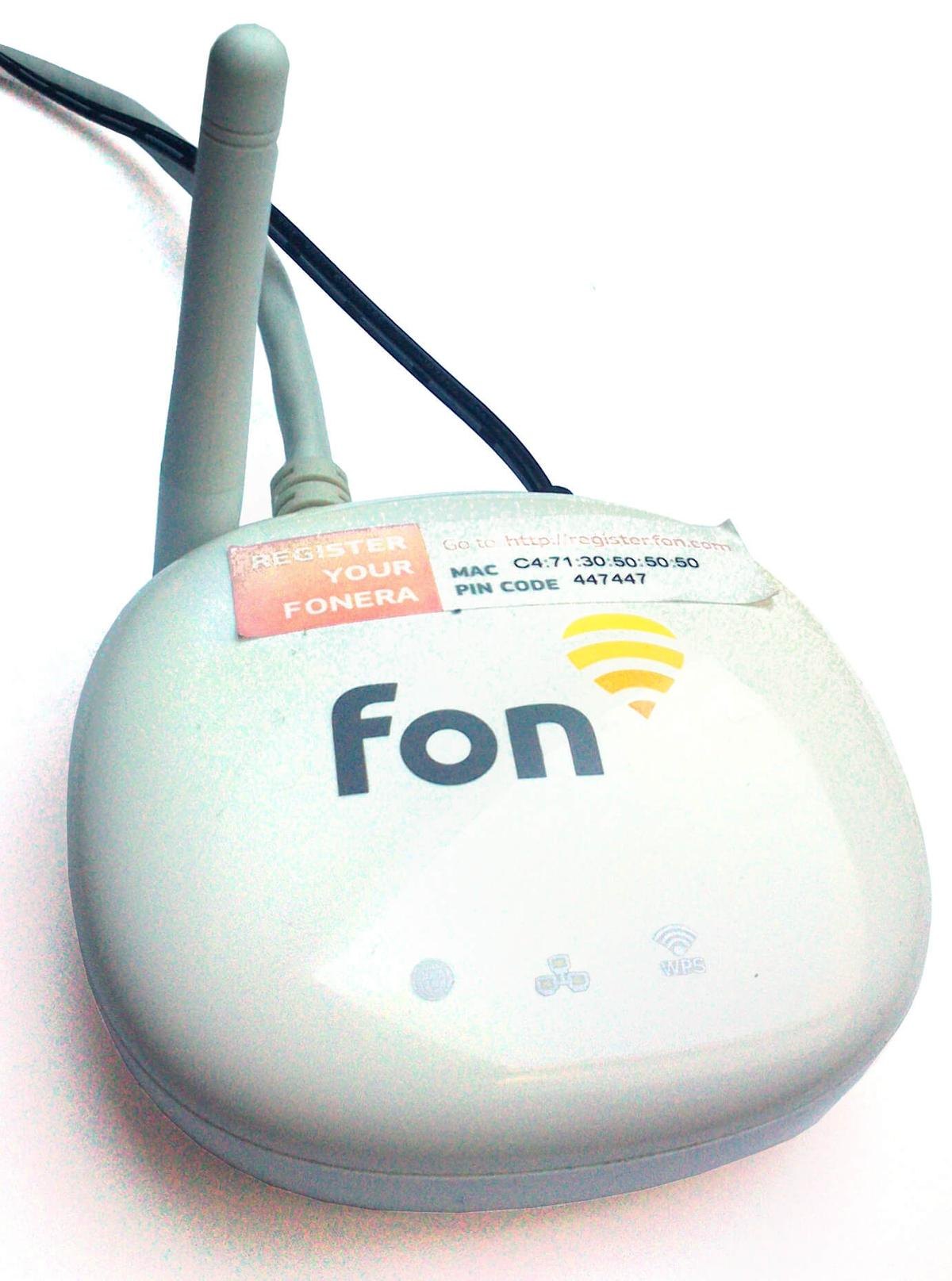
2.3 The Jasager era — Mark numbers as a versioning scheme
Early on, the software side got its own name: Jasager — German for “yes-man,” a direct reference to the KARMA “say yes to everything” behavior. The Jasager suite was the drivers, the web interface, and the software toolkit — the layer that turned a KARMA-patched AP into a usable tool with a UI.
This is where the “Mark N” naming convention comes from, and it’s worth being precise: historically, the Mark number specified the hardware platform, combined with the Jasager (later PineAP) software generation. A “Mark V” meant that generation of hardware running that generation of the suite. The two evolved together but were conceptually separate — hardware lineage and software lineage, bundled under one Mark number.
That convention is why today’s flagship is “Mark VII” — it is the seventh hardware generation, not the seventh anything-else. (And it’s why the Pager and Enterprise, which came after the Mark VII, don’t carry a “Mark VIII” number — Hak5 moved past sequential Mark numbering once the line split into differentiated form factors. More in § 8.)
2.4 Technique evolution — KARMA → Dogma → PineAP
The attack engine has had three named eras. Forum posts, old tutorials, and even some current UI elements still use the older terms, so all three matter:
Table 1 — The attack engine has had three named eras. Forum posts, old tutorials, and even some current UI elements still use the older terms, so all three matter
| Era | Name | What it was | Hardware generation |
|---|---|---|---|
| 1 | KARMA | The original technique: answer every probe request, become every network a client asks for. Broad, indiscriminate — be all networks to all clients. | Through the Mark V |
| 2 | Dogma | On the Mark V, Hak5 added “Dogma” alongside KARMA — described as “a compliment to KARMA.” Where KARMA answered probes reactively, Dogma proactively broadcast SSIDs from a collected pool. The pairing: KARMA reacts, Dogma broadcasts. | Mark V |
| 3 | PineAP | With the 5th-generation Pineapple, KARMA and Dogma were unified and rebuilt into the PineAP suite — the “intelligent sniffing and injection engine.” PineAP folded the reactive and proactive behaviors together and added recon, capture, deauth, and client tracking under one coordinated engine. | 5th gen onward (Nano/Tetra → Mark VII → Pager → Enterprise) |
   Technique lineage
   ═══════════════════════════════════════════════

   KARMA  ──────────────►  + DOGMA  ──────────────►  PineAP SUITE
   (react to probes,      (Mark V: also              (5th gen+: unified,
    be any network)        broadcast a pool           coordinated engine —
                           of SSIDs)                  recon, beacon, capture,
                                                      deauth, tracking)

   Modern terminology note: in today's PineAP UI, "Allow Associations"
   IS the old KARMA behavior. Vol 3 maps every modern term to its
   technique. The community also uses "MANA" — an EFF/sensepost
   refinement of the KARMA idea that handles the fact that modern
   clients probe less; PineAP's design absorbs the same lessons.
The crucial point for a modern operator: “KARMA” never went away — it became a mode inside PineAP. When today’s web UI offers “Allow Associations,” that toggle is KARMA. Vol 3 is the full PineAP catalog with every modern term mapped to its lineage.
2.5 The hardware lineage, generation by generation
   WiFi Pineapple hardware lineage
   ════════════════════════════════════════════════════════════════

   2008   Fon/Fonera + KARMA      "Mark I-III era" — the hacked-AP years,
          in a pineapple cup       Jasager suite, community-driven

    │     Fon sourcing dried up — the team moved to more capable APs
    ▼
   ~2010s Mark IV                 First "real product" generation;
                                   module system ("infusions")

    │
    ▼
   ~2013  Mark V                  KARMA + Dogma; the high-water mark of
                                   the early era; large module ecosystem

    │     Mark V components got scarce; usage patterns changed
    ▼
   2015   Nano  +  Tetra          6th generation. PineAP suite debuts.
          (compact)  (dual-band,  Two form factors from one generation:
                      higher      Nano = USB-stick portable,
                      power)      Tetra = dual-band desktop unit

    │
    ▼
   ~2020  Mark VII                7th generation. Single-core MIPS SoC,
                                   3 role-based radios, USB-C, the modern
                                   web UI + Campaigns + Cloud C2

    │     The line stops being a single sequential ladder —
    ▼     it splits into differentiated form factors
   2024+  Pager        Enterprise  Pocket unit (display+battery+tri-band)
                                   and rack-mount flagship (5 radios, AC)
Two transitions in that lineage are recurring themes, not one-offs:
-
Component scarcity drives generations. The Fon→Mark IV move happened because Fon APs got hard to source. The Mark V→Nano move happened because Mark V components got scarce. Hak5’s hardware generations are partly forced by the supply chain — a useful thing to know when judging how long a current model will be supported.
-
One generation, multiple form factors. The 6th generation wasn’t one device — it was the Nano and the Tetra. The current line takes that further: Mark VII, Pager, and Enterprise are differentiated form factors serving different deployment shapes (§ 8).
2.6 The 6th generation — Nano and Tetra
The 6th generation matters because it’s where PineAP debuted, and because the Nano and Tetra are still in the field and still in the docs (Hak5 keeps a wifi-pineapple-6th-gen-nano-tetra docs section live).
- Nano — the compact one. A USB-stick-sized Pineapple you could plug into a laptop or a battery pack. The Nano was specifically Hak5’s answer to Mark V component scarcity plus changing usage methods — people wanted something more portable, with new radios and a new form factor.
- Tetra — the bigger sibling. Dual-band, higher-powered, desktop-class — the “do it properly at a desk or in a pack” unit of the generation.
The Nano/Tetra split is the direct ancestor of today’s Pager/Enterprise split: a portable member and a powerful member of the same generation. If you understand “Nano was the portable, Tetra was the powerful,” you already understand “Pager is the portable, Enterprise is the powerful” — and the Mark VII sits where the generation’s baseline sits.
Legacy term — “infusions”: Mark IV/V-era modules were called infusions. Modern modules are just modules. If a forum post mentions infusions, it’s pre-PineAP-era content — useful for technique history, not for current operation.
2.7 The 7th generation — Mark VII, and the line splits
The Mark VII (~2020) is the 7th hardware generation and the current baseline. What it brought:
- A single-core MIPS network SoC — purpose-built networking silicon, not a general-purpose CPU.
- Three role-based radios — the management/PineAP/monitor separation became standard.
- USB-C — power and ethernet over one modern connector.
- The modern web UI — the polished interface, Campaigns (automated audits → reports), and Cloud C2 enrollment.
The Mark VII is “the industry-standard WiFi pentest platform” in Hak5’s own framing — and critically, it’s where the naming convention stopped. There is no “Mark VIII.” Instead, Hak5 did something different: it kept the Mark VII as the baseline and branched the line into differentiated models rather than marching a single number forward.
Hak5 has also iterated within the Mark VII — there’s a “Mark VII 2.0” refresh and the MK7AC dual-band adapter that turns a 2.4-GHz-native Mark VII into a 5 GHz-capable unit (the basis of the +AC Tactical kit). Vol 11 covers the AC story in full.
2.8 Pager and Enterprise — the line goes wide
After the Mark VII, the Pineapple line stopped being a ladder and became a lineup. Instead of a “Mark VIII” that was just “Mark VII but more,” Hak5 shipped two differentiated models:
- Pager — the line goes small. A pocket/belt-clip device with an on-board 2.4” color display, physical buttons, a 2000 mAh battery, tri-band 2.4/5/6 GHz radios, and Bluetooth — a Pineapple you operate without a laptop, in short-window opportunistic situations. Its PineAP engine is described as “100× faster than any other Pineapple device” — a generational leap in the engine, packaged in the smallest body.
- Enterprise — the line goes big. A rack-mount, AC-powered, metal-enclosure platform with a quad-core ARM CPU and five dual-band MIMO radios, built to handle ~100 DHCP clients and to live permanently in a rack. It’s the agency/firm/permanent-install answer.
This is the Nano/Tetra pattern repeating at a larger scale: a portable member and a powerful member, plus the baseline in the middle. The “generation” concept has effectively been replaced by a product matrix — which is exactly why this deep dive needs per-model volumes (9-15) rather than one “the Pineapple” treatment.
   The line, today — a matrix, not a ladder
   ═══════════════════════════════════════════

              portable  ◄──────────────►  powerful
                 │                           │
        PAGER ───┤                           ├─── ENTERPRISE
        pocket,  │      MARK VII (±AC)        │    rack, 5 radios,
        display, │      the baseline —        │    100 clients,
        battery, │      everything is         │    AC power,
        tri-band │      measured against it   │    quad-core ARM
                 │                           │
              (the 6th gen did this with Nano/Tetra;
               the current line does it with three)
2.9 Why the history matters operationally
This isn’t trivia. Four concrete reasons the lineage matters when you actually use the device:
- Legacy terminology in the live UI and docs. “Allow Associations” is KARMA. Old tutorials say “Dogma” for SSID-pool broadcast. Forum answers say “infusion” for module. You will hit all three terms; the history decodes them.
- Cross-generation tutorials. A huge body of Pineapple how-to content is Nano/Tetra-era or even Mark V-era. The technique often still applies (PineAP inherited KARMA/Dogma); the UI steps don’t. Knowing which generation a tutorial targets tells you how much to trust the click-by-click.
- Supply-chain-driven lifecycles. Hak5 generations have repeatedly been forced by component scarcity (Fon→IV, V→Nano). That’s a signal: a current model’s support life is partly hostage to its parts. Worth weighing in the buy decision (Vol 16).
- The “matrix not ladder” shape. Because the line split rather than laddered, “which Pineapple” is a form-factor question, not a newer-is-better question. The Pager isn’t “better than” the Mark VII — it’s the portable one. Vol 16’s whole comparison rests on this.
2.10 What the future may bring
Reading the seventeen-year arc forward — informed speculation, flagged as such:
- Wi-Fi 6E / 7 and the 6 GHz band. The Pager already has 6 GHz radios. The pattern across Pineapple history is that the line follows the 802.11 standard with a lag — KARMA-era was b/g, the Mark VII baseline is 2.4 GHz with ac as an add-on, the Pager is tri-band. A future Mark VII successor or an Enterprise refresh natively spanning 6 GHz / Wi-Fi 7 is the obvious next step.
- Bluetooth / BLE as a first-class surface. The Pager added Bluetooth 5.2 + BTLE. The Pineapple has been a Wi-Fi tool for seventeen years; the Pager is the first to treat BT as a peer capability. If that proves popular, expect it across the line — and expect the PineAP-style “intelligent engine” concept to extend to BLE.
- Deeper Cloud C2 + fleet orchestration. The Enterprise’s whole reason for existing is scale. The trajectory — web UI → Campaigns → Cloud C2 → Enterprise — points at fleet management, multi-device orchestration, and managed-service-style deployment as the growth direction.
- The supply-chain caveat, again. History says the next generation will likely be triggered partly by the current silicon getting scarce. Don’t expect any current model to be sold forever.
- What probably won’t change: the core identity. Seventeen years in, the WiFi Pineapple is still “the device that says yes to every probe request, in a polished package.” KARMA in 2008, PineAP in 2026 — same idea, more engine around it. The concept has been remarkably stable; it’s the hardware and the wrapper that iterate.
Vol 16 carries these forward into the actual buy decision — specifically, “buy now vs. wait for a 6 GHz-native successor.”
2.11 Resources
History sources
- Hak5 (the company): https://hak5.org — Pineapple in continuous development since 2008
- Hak5 forums (legacy threads — Mark IV/V roadmaps, KARMA/Jasager discussion): https://forums.hak5.org
- Nano/Tetra docs (6th-gen, still live — the PineAP-suite reference): https://docs.hak5.org/wifi-pineapple-6th-gen-nano-tetra/
- KARMA — original technique: Dai Zovi & Macaulay, ~2004-2005 (security-conference literature)
- MANA — the EFF/SensePost KARMA refinement: community + conference literature
Current line
- Mark VII: https://docs.hak5.org/wifi-pineapple/
- Pager: https://docs.hak5.org/wifi-pineapple-pager/
- Enterprise: https://docs.hak5.org/wifi-pineapple-enterprise/
Cross-reference
- Vol 3 (this series) — the modern PineAP suite, with every legacy term mapped
- ESP32 Marauder Firmware deep dive — the same KARMA-class techniques on different hardware:
This is Volume 2 of a 21-volume series. Next: Vol 3 is the technique catalog — the modern PineAP suite component by component (Allow Associations, Log Probes, PineAP Daemon, Beacon Response, Broadcast SSID Pool, Capture SSIDs to Pool, targeting, deauth, handshake capture, client tracking), every one mapped to what it actually does on the air and to its KARMA/Dogma lineage.
Comments (0)