OpenSourceSDRLab PortaRF · Volume 1
OpenSourceSDRLab PortaRF Volume 1 — Series Overview, Decision Tree, and Where PortaRF Sits
What it is vs DIY HackRF + PortaPack, the integration deltas, buy-vs-skip vs the owned porta unit, depth indices into Vols 2-12
Firmware ↔ Device matrix. The PortaRF ships pre-flashed with Mayhem — the same PortaPack firmware the owned
portabench unit runs. (Part of the Firmware ↔ Device “runs on” matrix.)
1.1 About this volume
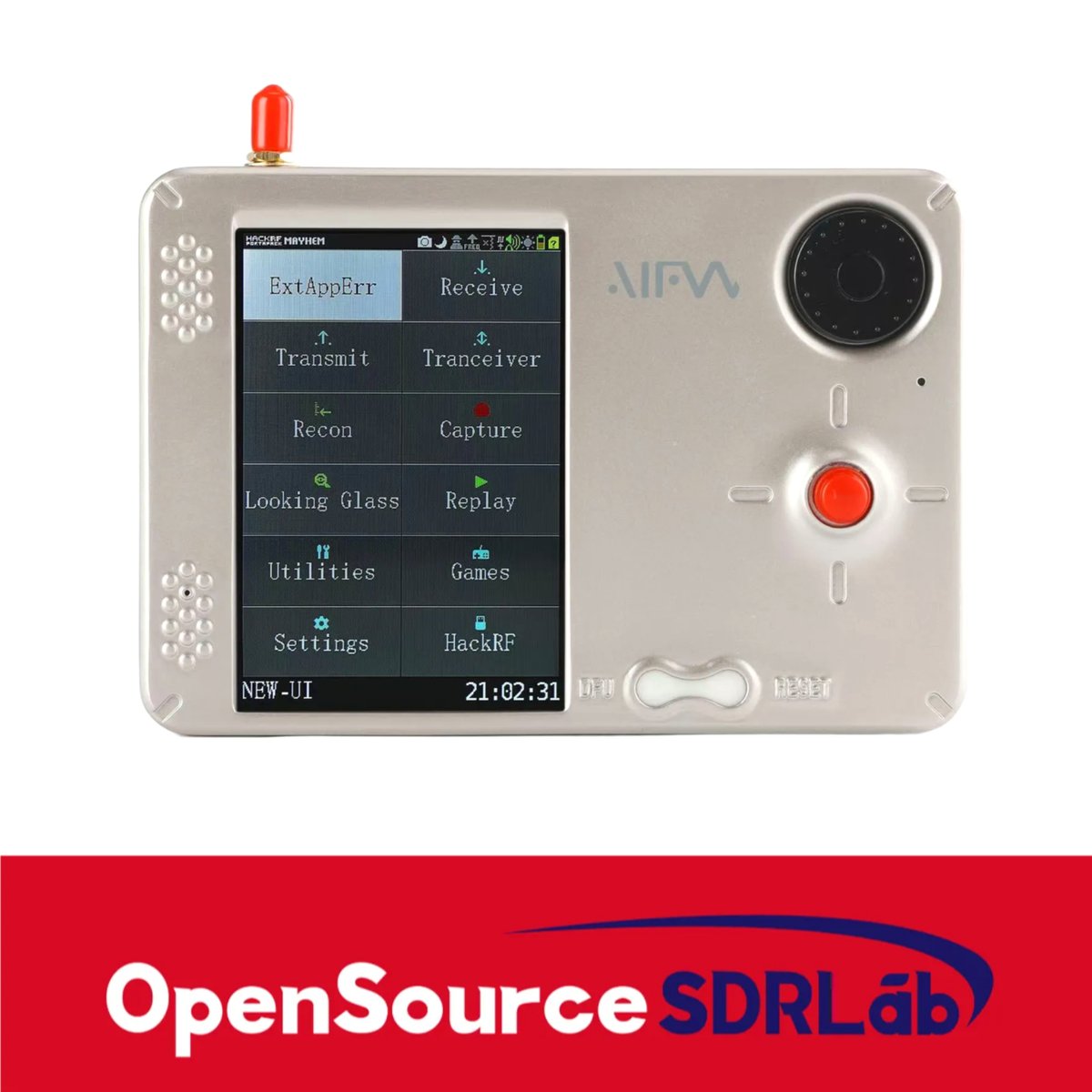
This is the overview volume of a twelve-volume engineer-grade deep dive into the OpenSourceSDRLab PortaRF — a HackRF-class handheld SDR with integrated PortaPack-class display + keyboard + battery in a single enclosure. PortaRF is OpenSourceSDRLab’s commercial answer to the “I want a HackRF as a handheld” use case.
This volume’s job is to anchor the series and tell the reader which of Vols 2-12 covers each subsystem. The most important thing to understand up front: the PortaRF runs the same RF silicon as the existing HackRF One r4 (porta unit) — the deep dive’s center of gravity is the integrated-handheld form factor, not the RF capabilities (those live in ../../../HackRF One/03-outputs/HackRF_One_Complete.html).
This volume specifically does not teach HackRF fundamentals (Vols 2-3 of HackRF One), Mayhem firmware (Vol 6 of HackRF One), capture/replay workflows (Vols 8-9 of HackRF One). It teaches what makes PortaRF distinct as a product and where in the rest of this series to go for each PortaRF-specific topic.
Cross-reference discipline: this entire series is built on the assumption that the reader already knows HackRF One. For anything that’s “same as HackRF One”, the volume cites the cross-reference rather than re-authoring. This keeps the PortaRF deep dive focused (~150-200 KB total) vs duplicating the HackRF One deep dive’s content.
1.2 What the PortaRF is
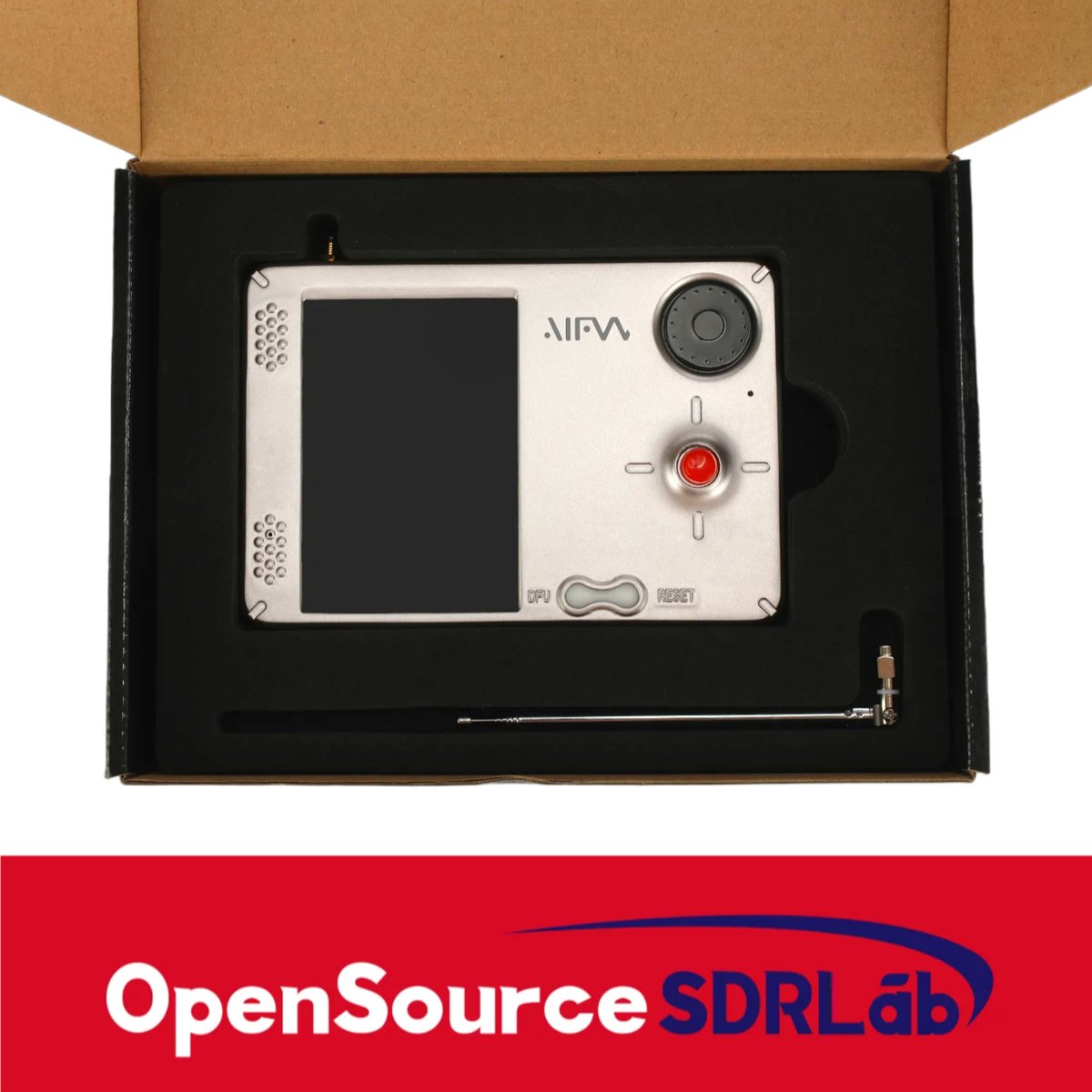
The OpenSourceSDRLab PortaRF is a single-enclosure handheld product that bundles:
- A HackRF-class SDR board (almost certainly the Clifford Heath modified design — see § 2.3)
- A PortaPack-class user interface — TFT display + buttons / encoder / keyboard
- An integrated LiPo battery for standalone operation
- A microSD card slot for firmware updates + capture storage
- A single antenna connector (RP-SMA female, HackRF convention)
- A single firmware-update path combining the HackRF board’s firmware update + the PortaPack board’s Mayhem firmware update
Sold as one box — not “buy a HackRF + buy a PortaPack + buy a battery enclosure + assemble” the way the porta unit was sourced.
1.2.1 The OpenSourceSDRLab lineage
OpenSourceSDRLab (opensourcesdrlab.com) is one of several manufacturers shipping the Clifford Heath modified HackRF design. Their product line as of 2026-05-13 (based on community references):
Table 1 — OpenSourceSDRLab (opensourcesdrlab.com) is one of several manufacturers shipping the Clifford Heath modified HackRF design. Their product line as of 2026-05-13 (based on community references)
| Product | Description | Form factor |
|---|---|---|
| HackRF R10 / R10+ | Heath-modified bare HackRF board with USB-C | Board only |
| HackRF H4M Clifford Edition | H4M revision, Heath-modified | Board only |
| PortaRF | HackRF + PortaPack + battery integrated | Handheld monolithic |
(There may be additional products / variants — verify on vendor page.)
PortaRF sits at the top of OpenSourceSDRLab’s lineup — the “ready to deploy” tier. R10/R10+/H4M are board-only options for users who want to integrate their own enclosure / display / battery.
1.2.2 Why “PortaRF” specifically (vs DIY HackRF + PortaPack)
The naming gives away the use case. “Porta” + “RF” = “portable radio frequency tool” = “a HackRF I can put in my pocket.” Vendor pitch:
Table 2 — The naming gives away the use case. "Porta" + "RF" = "portable radio frequency tool" = "a HackRF I can put in my pocket." Vendor pitch
| Vendor pitch | DIY HackRF + PortaPack reality |
|---|---|
| ”One-box, ready to use” | Three separate purchases (HackRF + PortaPack + enclosure) |
| “Pre-flashed Mayhem” | Flash Mayhem yourself; install SD card; configure |
| ”Battery sized for handheld use” | Source own LiPo, wire JST-PH connector, verify polarity |
| ”Mechanically integrated” | Stack PortaPack onto HackRF GPIO header; case it yourself or buy aftermarket case |
| ”Single firmware update workflow” | Two firmware paths — HackRF over hackrf_spiflash, PortaPack via SD card |
The PortaRF value is integration + assembly time — the silicon is the same Clifford Heath modified design the porta unit already has.
1.2.3 The Clifford Heath modified HackRF design (inheritance)
Cross-reference: ../../../HackRF One/02-inputs/volume_sources/vol1.md § 3 covers Heath’s modifications in detail. Capsule recap for PortaRF context:
Table 3 — Cross-reference: ../../../HackRF One/02-inputs/volumesources/vol1.md § 3 covers Heath's modifications in detail. Capsule recap for PortaRF context
| Original GSG part | Heath replacement | Function |
|---|---|---|
| (no antenna protection) | CLA4611-085LF | Antenna SMA protection — clamps RF input transients, blocks reverse-power damage that’s the #1 way HackRFs get bricked |
| MGA-81563-TR1G | TRF37B73 | MMIC amps — newer Texas Instruments amp; better noise floor, larger output power |
| SKY13350-385LF | SKY13453-385LF | RF switches — newer Skyworks; same switches GSG moved to in r6/r8/r10 |
| Original Bias-T | Improved | Better high-frequency response; better RF sensitivity when disabled |
The main signal-path silicon — MAX2837 (transceiver), RFFC5072 (mixer), MAX5864 (ADC/DAC), LPC4320 (MCU), Si5351 (clock) — is unchanged from the GSG reference design. Heath’s mods are RF-front-end only.
The CLA4611-085LF protection is the unambiguous practical win. Blowing the LNA via TX-into-mismatch or hot-RF-into-RX is the most common way HackRFs get bricked — the protection chip mitigates that. Receiver sensitivity vs genuine GSG is mixed in community reports (no standardized testing); Heath’s design is best understood as a robustness upgrade, not a performance upgrade.
The PortaRF runs Heath’s modified design (with high confidence — every OpenSourceSDRLab HackRF product does). Practical implication: a brand-new PortaRF should be more resilient to “stupid antenna mistake” damage than a stock GSG HackRF One r4 like porta.
1.3 Hardware fast-facts panel
┌───────────────────────────────────────────────────────────────┐
│ OpenSourceSDRLab PortaRF                                      │
├───────────────────────────────────────────────────────────────┤
│ RF silicon  Clifford Heath modified HackRF                    │
│             MAX2837 transceiver · RFFC5072 mixer              │
│             MAX5864 ADC/DAC · LPC4320 MCU · Si5351 clock      │
│             CLA4611-085LF protection (Heath addition)         │
│             TRF37B73 MMIC amps · SKY13453-385LF switches      │
│ Frequency   1 MHz – 6 GHz (HackRF silicon limit)              │
│ TX power    Up to ~+15 dBm (silicon-limited)                  │
│ RX gain     Configurable; ~62 dB max (LNA + VGA + BB)         │
│ Sample rate Up to 20 MS/s (USB 2.0 bottleneck)                │
│ Display     TFT — PortaPack-class — likely 2.4" 320×240       │
│ Input       PortaPack-style buttons + encoder + QWERTY?       │
│ Battery     Integrated LiPo (size TBD, likely 1500-3000 mAh)  │
│ USB         USB-C (newer Heath revisions)                     │
│ Antenna     RP-SMA female with included whip                  │
│ Storage     microSD (Mayhem firmware update + captures)       │
│ Firmware    Mayhem (PortaPack canonical fork) pre-flashed     │
│ Half-duplex Yes (HackRF inherent limit — see HackRF One Vol 2)│
│ Form factor Handheld monolithic single-box                    │
│ Price       Estimated $400-600 (verify on vendor page)        │
└───────────────────────────────────────────────────────────────┘

For deeper-level HackRF silicon walkthrough: see `../../../HackRF One/03-outputs/HackRF_One_Complete.html` Vol 2.

For Clifford Heath modification rationale + verified parts list: see HackRF One Vol 1 § 3.

Many specs above are research-baseline — verify against vendor page.
1.4 Capability matrix — what it can and cannot do
The capability matrix inherits from HackRF One — same silicon, same firmware (Mayhem), same use cases. See ../../../HackRF One/02-inputs/volume_sources/vol1.md for the complete HackRF One capability matrix. Capsule recap:
Can do (inherited from HackRF One):
Table 4 — Can do (inherited from HackRF One)
| Domain | Capability |
|---|---|
| Reception | 1 MHz – 6 GHz, narrowband + wideband; FM, AM, SSB, ASK, FSK, GFSK, MSK, PSK |
| Transmission | Same band, up to ~+15 dBm |
| Sample rates | Up to 20 MS/s I/Q (USB 2.0 limited) |
| Decoding | Common protocols via Mayhem: AIS, ADS-B, POCSAG, BTLE, NRF, AFSK, DTMF, etc. |
| Replay | Captured signals replayed at original RF |
| Sweep | Wideband spectrum sweep with hackrf_sweep |
| Capture | Raw I/Q to SD card (Mayhem) or host (hackrf_transfer) |
| Standalone | Mayhem firmware enables full operation without a host computer |
| Tethered | All HackRF host-tools work identically over USB |
Cannot do (inherited limits):
Table 5 — Cannot do (inherited limits)
| Limitation | Reason |
|---|---|
| Full-duplex (simultaneous TX + RX) | Single ADC/DAC path; HackRF is half-duplex by design |
| Sample rates above 20 MS/s | USB 2.0 limited (USB 3.0 would help but isn’t on the LPC4320) |
| Wide-instantaneous-bandwidth survey | Max 20 MHz instantaneous; for wider bands, sweep mode trades time for bandwidth |
| HF below 1 MHz | MAX2837 silicon doesn’t cover HF; would need HF upconverter or different SDR |
| Low-noise reception below -85 dBm | HackRF noise floor; for weaker signals, use a low-noise preamp + the HackRF as a frontend |
| Cellular bands (in some jurisdictions) | Legal — not silicon. Cellular receive is technically possible but may be illegal in some regions; cellular TX is illegal in most. |
PortaRF-specific deltas from a DIY stack:
Table 6 — PortaRF-specific deltas from a DIY stack
| Domain | PortaRF | DIY HackRF + PortaPack |
|---|---|---|
| Setup time | Out-of-box working | Source parts, assemble, flash, troubleshoot |
| Form factor | Single box | Stacked boards (PortaPack on HackRF GPIO) |
| Battery management | Vendor-integrated | DIY — source LiPo, JST-PH polarity check, charge management |
| USB connector | USB-C (newer Heath) | Heath rev-dependent — mini-B (older) or USB-C (newer) |
| Antenna | Single SMA exposed | Single SMA exposed (same) |
| Custom modification (CC1101 sub-GHz daughter, external amp) | Limited (integrated form factor) | Easier (stacked design has GPIO header access) |
1.5 PortaRF vs the existing porta unit
The lab already has a working HackRF + PortaPack stack — the porta unit. Per MY_GEAR/inventory.yaml:
- HackRF: HackRF One r4 (Clifford Heath modified design — confirmed 2026-05-11)
- PortaPack: H2+ (separate board, GPIO-stacked on HackRF)
- USB: mini-B (pre-USBC-V1 Heath revision)
- Storage: microSD
- Firmware: Mayhem
- Status: Owned and operational
The question this project answers: does PortaRF add enough value over the owned porta to justify a $400-600 purchase?
Table 7 — 5. PortaRF vs the existing porta unit
| Dimension | porta (owned) | PortaRF (aspirational) | Winner |
|---|---|---|---|
| RF silicon | Heath modified | Heath modified (likely same) | Tie |
| Form factor | Stacked boards | Integrated handheld | PortaRF for portability; porta for customizability |
| USB connector | mini-B | USB-C | PortaRF (modern cable availability) |
| HackRF generation | r4 (pre-USBC V1) | R10/R10+ or H4M (verify) | PortaRF (newer revision) |
| Battery | (separate / DIY) | Vendor-integrated | PortaRF (integrated design) |
| Custom modification | Easier (stacked) | Harder (sealed) | porta (flexibility) |
| Field robustness | Two-board stack (mechanically fragile) | Single-box monolithic | PortaRF (more durable) |
| Cost | Sunk (already owned) | $400-600 (new spend) | porta (free) |
| Spare hardware option | If porta breaks, replacement is another DIY assemble | If PortaRF breaks, vendor warranty / RMA | PortaRF (less downtime risk) |
| Customizable display / keyboard | Yes (replace PortaPack) | No (integrated) | porta (option) |
The verdict (preliminary, sketched here; full analysis in Vol 11):
PortaRF is a duplicate of existing capability with marginal practical advantages (USB-C, mechanical robustness, newer Heath revision) but identical RF capability. Buy only if:
- porta becomes unreliable (mechanical / electrical failure mode)
- A spare HackRF is needed for field deployment (one unit at home, one in the bag)
- Field-deployment durability needs the single-box form factor
- USB-C connectivity is a hard requirement that the mini-B porta can’t meet
Otherwise: keep porta, defer PortaRF.
1.6 Decision tree — buy PortaRF or stick with porta?
                Does porta currently work for the use case?
                              │
              ┌───────────────┴───────────────┐
              │                               │
           Yes ↓                            No ↓

        ┌─────────────────┐         ┌─────────────────┐
        │ Need a spare    │         │ porta failure   │
        │ HackRF for field│         │ mode?           │
        │ deployment?     │         │                 │
        └────┬────────────┘         └────┬────────────┘
             │                            │
       ┌─────┴─────┐              ┌───────┴───────┐
       │           │              │               │
     Yes ↓        No ↓         Mechanical?      RF silicon?
                                    │               │
   PortaRF      Keep             PortaRF          Repair (RF
   makes sense  porta;           is the field-    silicon doesn't
   (one home,   defer            robust answer    "go bad"
   one bag)     PortaRF                            spontaneously
                purchase                           — likely user
                                                   error / blown
                                                   LNA. Repair or
                                                   replace porta.)


   Other purchase triggers:
   - USB-C becomes a hard requirement (porta is mini-B)
     → PortaRF makes sense
   - Field deployment exposes porta's two-board stack to vibration / impact damage
     → PortaRF (single-box) makes sense
   - A "ready to grab and go" handheld is needed
     → PortaRF makes sense (porta requires some assembly + cable management)
   - PortaPack v2 / next-gen UI announced and PortaRF ships it first
     → PortaRF may be the cheaper path to that UI
For the current situation (2026-05-13, porta works fine, USB-C not blocking workflows): defer PortaRF.
For future state where porta breaks or field deployment demands single-box durability: PortaRF is the appropriate next purchase.
1.7 Hardware at a glance (forward-ref Vol 2)
Vol 2 walks the PortaRF hardware. The 30-second summary:
- Same Clifford Heath modified HackRF silicon as porta (high confidence — vendor pattern)
- PortaPack-class UI — 2.4” 320×240 TFT, buttons + encoder + possible QWERTY (verify on vendor page)
- Integrated LiPo battery sized for handheld use (1500-3000 mAh likely)
- USB-C (newer Heath revision)
- Single-box monolithic — no exposed GPIO header for daughter cards / external amp
Full hardware walk in Vol 2.
1.8 Firmware at a glance (forward-ref Vol 6)
Vol 6 covers the PortaRF firmware ecosystem. Quick orientation:
- Mayhem firmware is the canonical PortaPack fork — the most actively-developed firmware for PortaPack-class hardware.
- Pre-flashed at vendor — PortaRF should ship with current Mayhem.
- Update path: SD-card flash (PortaPack convention — drop new .bin on SD root, reboot, self-flash).
- Alternative firmwares: legacy Havoc (much less maintained), stock PortaPack (rarely worth flashing).
- HackRF firmware updates are separate — done over USB via
hackrf_spiflash. Rare; usually only for new silicon support.
For the full Mayhem feature catalog: ../../../HackRF One/03-outputs/HackRF_One_Complete.html Vols 4-6.
1.9 Comparison to sibling tools
Table 8 — 9. Comparison to sibling tools
| Sibling tool | Overlap with PortaRF | PortaRF wins when | Sibling wins when |
|---|---|---|---|
HackRF One + PortaPack (porta) | Direct overlap — same silicon | Field robustness; USB-C; single-box | porta is sunk cost; expansion flexibility |
| RTL-SDR | Receive-only, 24 MHz - 1.7 GHz | TX, wider band, replay | Cost ($30), passive monitoring |
| HackRF One + PC + GNU Radio (tethered) | Same RF | Standalone operation | Heavier processing, automation |
| Wired Hatters Banshee | Multi-modal pentest | Pure RF / SDR work | Wi-Fi/BLE attacks |
| Flipper Zero | Sub-GHz only, narrow capture | Wide-band, arbitrary modulation | Form factor, RFID/NFC/IR ecosystem |
| Bus Pirate 6 | None (RF vs wired) | RF work | Wired protocol bring-up |
| SDRplay RSPdx-R2 | Receive-only SDR, wider band | TX, replay, standalone | RX-only with much better noise floor + 14-bit ADC |
| KrakenSDR | Multi-receiver direction-finding | Single-receiver TX/RX | Multi-channel coherent receive (direction-finding application) |
PortaRF’s niche: handheld monolithic HackRF. It’s the single-box answer to “I want a HackRF as a handheld” — no other product in the lineup or aspirational list serves that exact niche.
1.10 Status — current posture (aspirational)
As of 2026-05-13, the PortaRF is aspirational research-only — not yet purchased. The deep-dive content is research-baseline:
- Confirmed: OpenSourceSDRLab is one of the Clifford Heath modified HackRF resellers (per the existing HackRF One CLAUDE.md and porta’s documentation).
- High confidence: PortaRF uses Heath’s modified design (vendor pattern).
- Medium confidence: specs around display, keyboard, battery (verify against vendor page).
- Pending acquisition: bench-test, real-world battery life, durability, vendor support quality.
Decision gates before acquisition:
- porta still works — if porta is functional, PortaRF is duplicate capability. Defer.
- porta’s mini-USB cable availability declining — eventually mini-B cables get hard to source. PortaRF’s USB-C would matter more then.
- Field deployment of porta exposes its two-board stack to damage — PortaRF’s single-box design becomes more attractive.
- PortaPack v2 or next-gen UI ships with PortaRF first — could shift the value calculus.
For now: research-only. The deep dive sets up the buy-vs-skip decision criteria for a future acquisition.
1.11 Depth indices into Vols 2-12
Hardware:
- PortaRF’s RF silicon → Vol 2 + cross-ref HackRF One Vol 2 (canonical reference)
- Clifford Heath modification details → Vol 2 § 3 + HackRF One Vol 1 § 3
- PortaRF integration deltas vs DIY stack → Vol 2 § 4-5
- Hardware revisions → Vol 2 § 6 (R10 vs R10+ vs H4M variants)
External interfaces:
- USB-C details → Vol 3 § 2
- SD card requirements → Vol 3 § 4
- Antenna mount + included whip → Vol 3 § 5
- Expansion (or lack thereof) → Vol 3 § 6
Display + controls:
- PortaPack-class TFT → Vol 4 § 2
- Keyboard / encoder layout → Vol 4 § 3
- UI patterns (Mayhem menus) → Vol 4 § 4
Battery + thermal:
- Battery capacity and life → Vol 5 § 2
- Charging behavior → Vol 5 § 3
- Thermal under sustained TX → Vol 5 § 4
- Field-deployment power profile → Vol 5 § 5
Firmware:
- Mayhem on PortaRF → Vol 6 § 2 + cross-ref HackRF One Vol 4-5
- HackRF firmware vs Mayhem distinction → Vol 6 § 3
- Firmware revisions / version selection → Vol 6 § 4
- Custom Mayhem forks → Vol 6 § 5 + Vol 10
Programming:
- Host-side tools (
hackrf_*) → Vol 7 + cross-ref HackRF One Vol 7 - GNU Radio integration → Vol 7 § 4
- Custom firmware development → Vol 7 § 5 + Vol 10
Flashing:
- HackRF firmware update via
hackrf_spiflash→ Vol 8 § 2 - Mayhem firmware update via SD card → Vol 8 § 3
- Recovery from bricked Mayhem → Vol 8 § 4
- Factory backup before flashing → Vol 8 § 5
Use cases:
- Standalone field recon → Vol 9 § 2
- Tethered laboratory work → Vol 9 § 3
- Hybrid (PortaRF as USB-tethered SDR + Mayhem visualization) → Vol 9 § 4
- Replay attack workflow → Vol 9 § 5 + cross-ref HackRF One Vol 8
- Decode workflows (AIS, ADS-B, etc.) → Vol 9 § 6 + HackRF One Vol 8
Custom firmware:
- Mayhem fork strategy → Vol 10 § 2
- Adding a custom Mayhem app → Vol 10 § 3
- Cherry-picking from Havoc → Vol 10 § 4
Operational posture:
- Regional rules (US FCC + EU ETSI + JP ARIB) → Vol 11 § 2
- Antenna safety (RF + TX-into-mismatch) → Vol 11 § 3
- Capture data chain-of-custody → Vol 11 § 4
- When NOT to use PortaRF → Vol 11 § 5
- Pre-engagement checklist → Vol 11 § 6
Cheatsheet:
- Laminate-ready field card → Vol 12 (the entire volume)
1.12 Resources
Vendor
- OpenSourceSDRLab: https://opensourcesdrlab.com/
- PortaRF product page: search vendor site (URL TBD)
Foundational HackRF + Mayhem references
- HackRF One canonical deep dive (the sibling project — the foundation):
- HackRF firmware repository: https://github.com/greatscottgadgets/hackrf
- Mayhem firmware: https://github.com/portapack-mayhem/mayhem-firmware
- Mayhem wiki: https://github.com/portapack-mayhem/mayhem-firmware/wiki
Clifford Heath modifications
- Heath’s HackRF fork: https://github.com/cjheath/hackrf
- Mayhem wiki entry on Heath’s design: https://github.com/portapack-mayhem/mayhem-firmware/wiki/Clifford%27s-version
Alternative HackRF resellers / variants (for comparison)
- Great Scott Gadgets (canonical HackRF One): https://greatscottgadgets.com/hackrf/
- Rabbit Labs (Heath USBC V1): https://rabbitlabs.com/
- Wired Hatters (Heath R10/R10+): https://wiredhatters.com/
- SDR Store (Heath H4M Clifford Edition): https://www.sdr-store.com/
Datasheets (HackRF silicon — same as HackRF One)
- ESP32-S3 / LPC4320 / MAX2837 / RFFC5072 / MAX5864 / Si5351 — all linked from HackRF One Vol 2 § 3
Cross-tool references
- Hack Tools comparison:
../../../_shared/comparison.md - Capability matrix: sortable view
- Legal / ethics:
../../../_shared/legal_ethics.md
This is Volume 1 of a twelve-volume series. Next: Vol 2 walks the PortaRF hardware — Clifford Heath modified HackRF silicon (referencing HackRF One Vol 2 as canonical), the integration deltas (PortaPack-class UI hardware, integrated battery, single-box mechanical), and the OpenSourceSDRLab-specific revisions.
Comments (0)